- About Archives
- About SAA
- Careers
- Education
- Publications
- Advocacy
- Membership


Facilitating generative, positive discussion is not always straightforward, but it's possible by creating boundaries and rules of engagement for respectful exchange. Since Council members only have three years to serve, it's vital to encourage participation from the onset to promote positive, productive work.
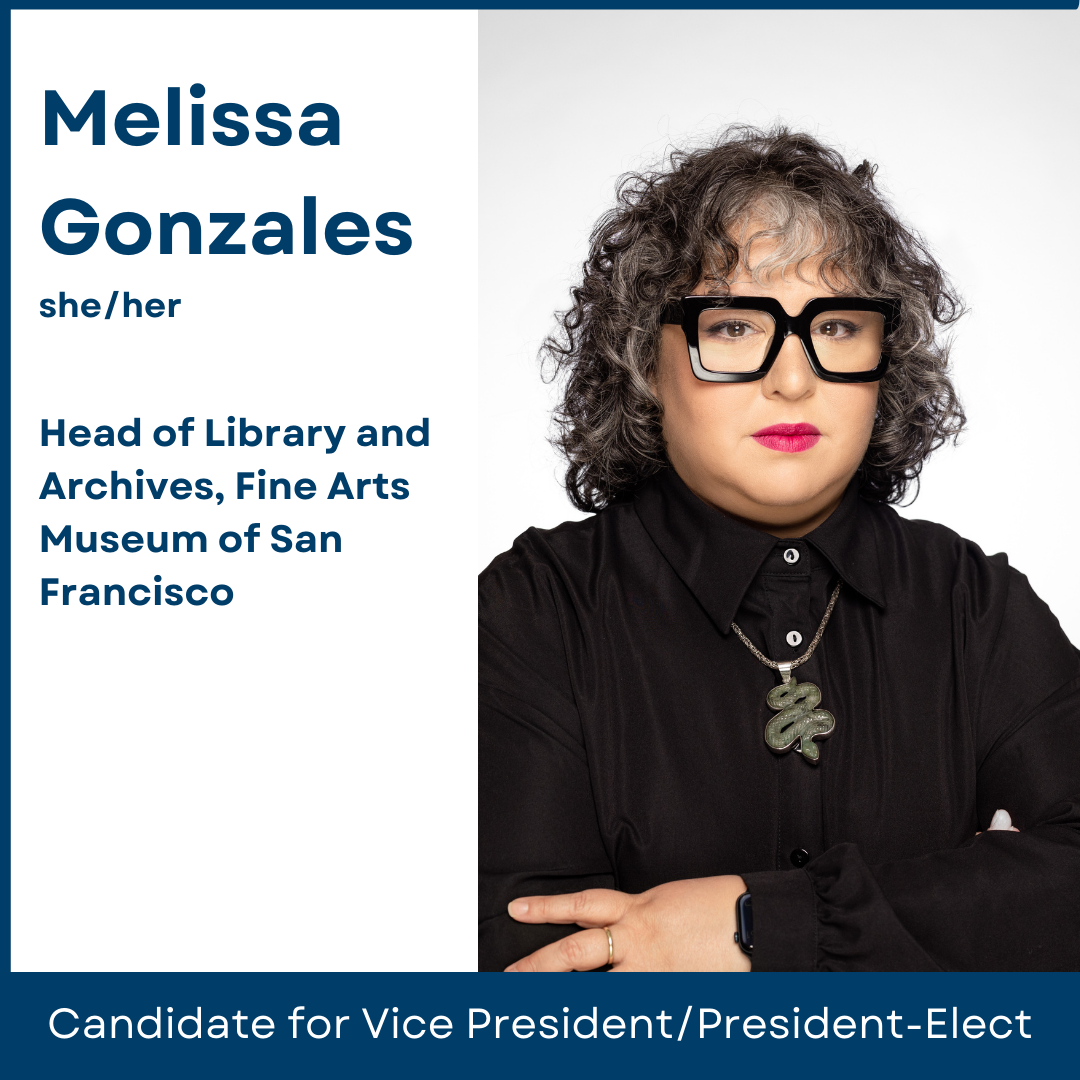
It's been a capricious yet rewarding eighteen years in the profession, beginning as a processing archivist for a small South Texas town of 2,000 to my current role as Head of Library and Archives for the Fine Arts Museums of San Francisco. With a BA in Art History from The University of Texas at Austin, my original goal was to work in a museum, which I eventually did by taking an indirect path via archives after receiving my MSLIS from Simmons University. Leveraging my records and personnel management experience (developed via corporate banking) along with my archival education, I established and/or expanded institutional archives at various museums. That work ultimately led to invitations to contribute chapters to two SAA publications: Museum Archives: Practice, Issues, Advocacy and the forthcoming Archival Fundamental Series III, Volume 6: Selecting and Appraising Archives and Manuscripts. My career objectives never included management roles, but now that I'm here, I strive to use my agency and authority to advocate for my staff, collections, and colleagues.
In 2007, I joined SAA and became co-chair of Simmons' SAA Student Chapter. Additional SAA leadership experience includes: Students and New Archives Professionals Section (Bylaws Subcommittee, appointed 2012; Steering Committee, appointed 2012; Chair, elected 2013); Mentoring Program Subcommittee (appointed 2012); Career Development Subcommittee (appointed 2013); Appointments Committee (appointed 2014 and 2024); Nominating Committee (elected 2016); and Council (elected 2018). My proudest accomplishment as a Council member occurred in 2019 when I was able to amplify the work of the Ad-hoc Working Group on Archivist Salary Transparency and successfully introduce recommendations for salary transparency in job postings submitted to the SAA Career Center, as well as the creation of the Archival Compensation Task Force. Other leadership activities include joining the 2014 cohort of the Archives Leadership Institute and serving in various capacities for the Society of Southwest Archivists (SSA), culminating in my election as President in 2021.
CANDIDATE'S RESPONSE
When running a meeting or leading a group, it's important to cultivate a collegial environment where everyone feels comfortable being their authentic selves sharing ideas free of judgement. First, I ask attendees to assume goodwill, then I set boundaries by establishing expectations that will ensure all have time to speak. While the latter can be done by allocating equal time per person and adhering to that structure, the former is more difficult in that it relies on everyone being more self-aware of their actions and reactions. When setting expectations, I strongly encourage active listening and respecting all viewpoints. As both a participant and a facilitator, I guide the conversation to prevent dominant personalities from overtaking the exchange by identifying current talking points, clarifying what has been said to prevent circular discussion, and potentially curbing misunderstandings while showing areas of agreement. I'm also constantly reading the room so I'm aware of the vibe and recognize when someone is truly dominating the conversation so I can step in to prevent a pernicious atmosphere. When observing those interactions, I thank the over-contributors for their input and direct the dialogue to others by inviting attendees to present their thoughts, especially if I've noticed someone taking notes or exhibiting non-verbal cues.
As a solutions-oriented thinker, my first instinct has been to remedy the situation, which in the past has presented as domineering behavior. Recognizing this in myself helps me identify when a dominant speaker is coming from a place of enthusiasm versus obstinance and intercede accordingly. If it's the latter, I engage in positive conflict resolution by brainstorming disagreements, denouncing personal criticisms, and refocusing on shared issues and ideas. I do my best to ensure the dominant voice is not abruptly dismissed but rather redirect the conversation positively to show they've been acknowledged and must now respectfully give space to their colleagues' perspectives. Universal agreement is near impossible, but it is feasible to create an atmosphere where dissent with mutual respect can co-exist. Facilitating generative, positive discussion is not always straightforward, but it's possible by creating boundaries and rules of engagement for respectful exchange. Since Council members only have three years to serve, it's vital to encourage participation from the onset to promote positive, productive work.
CANDIDATE'S RESPONSE
Transparency via consistent communication and listening forums is an easy lift and supports Goal 4's promise to foster a culture of inclusiveness by providing an active means of informing members of what is happening internally. Given compensation issues in the profession, it's understandable that members want to know how their money is spent. Council meeting minutes and budget reports are posted online, but they aren't necessarily the easiest documents to interpret. Through regularly scheduled forums, Council and Officers could break down the costs of running the organization including how dues and sponsorship funds support and impact the budget. Armed with more information, members might be more willing to invest in their professional growth and that of the industry by supporting membership via renewal.
Having staff empowers SAA leaders to focus their time and energy on making decisions that promote and amplify the work of committees and sections that develop the real-world best practices and standards directly impacting archives and archivists, including processing, digitization, public policy, compensation, and inclusive description. Currently, SAA relies on income from membership dues and the annual meeting to cover the cost of administrative staff. Without executive staff, the free labor and energy it takes to maintain these organizations can prohibit leaders from exacting real change. It will become increasingly difficult to fulfill Goals 1 and 3 if SAA does not reevaluate its current business model and find sustainable ways to earn income necessary to fund staff. Without a professional organization dedicated to archives and archivists, we will not have a platform to foster executive leadership development nor promote the value of what we do to those outside the profession. It has been engrained in us as a profession that we have to wear all the hats. It's okay for us to acknowledge we don't have all the solutions; that seeking answers and help from outside our organization, and maybe even our own field, is a step in the right direction. Since many peer organizations are going through similar struggles, it would behoove us to form a collaborative space or network to workshop ideas and develop actionable solutions which falls firmly under Goal 3. If the organization's financial sustainability depends on member retention, then we need to earn the trust of our constituents by ensuring we respond to their needs via accountability and following through on initiatives such as those articulated in our Strategic Plan.
|
The Nominating Committee has slated the following SAA members as candidates for office in the 2026 election: Vice President/President-Elect
Council
Nominating Committee
|