- About Archives
- About SAA
- Careers
- Education
- Publications
- Advocacy
- Membership

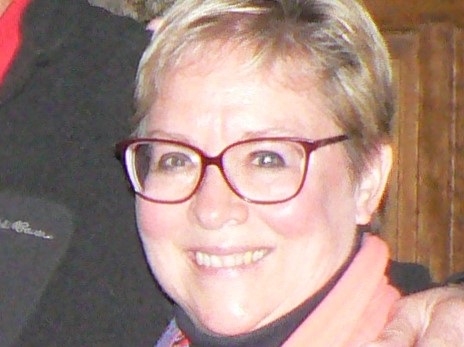
Menzi Behrnd-Klodt, consultant on legal, archival, and records management issues at Klodt and Associates, will be inducted as a Fellow of the Society of American Archivists (SAA) during an awards ceremony at the Annual Meeting of SAA in Anaheim, CA. The distinction of Fellow is the highest honor bestowed on individuals by SAA and is awarded for outstanding contributions to the archives profession.
Behrnd-Klodt’s unique level of expertise has made her an indispensable leader and educator at the intersection of legal and archival issues. Studying at the University of Wisconsin, she obtained a law degree as well as two master’s degrees in library information science and history. As an experienced attorney, archivist, and archival educator, her work spans a variety of settings, from historical societies and community archives to government records programs, universities, and corporations.
Throughout her career, Behrnd-Klodt has demonstrated a commitment to increasing archival access, a value reflected by the generations of archivists who have been empowered and enriched by her mentorship, teaching, and intellectual contributions to the field. One example among many is her work with the History and Humanities Program for the State of Hawai’i. In the mid-1980s, very few records and materials from Hawai’i's various ethnic communities, organizations, and businesses were being collected or preserved. As a consultant, Behrnd-Klodt set up a training process for staff recruits from various ethnic communities. She conducted teaching sessions, created tailor-made archival workshops, and often helped sites process their collections, working onsite alongside the staff she was training. One former colleague notes “an amazing difference pre- and post-Menzi” when describing the impact she had on archival accessibility and education in the State of Hawai’i.
Along with her consultant work, Behrnd-Klodt’s extensive portfolio of writings, dozens of papers and talks, and numerous workshops and educational services have enriched the archives profession. She has provided guidance on challenging ethical and legal issues such as confidentiality, privacy and access, donors and contracts, copyright and intellectual property, and replevin (legal action to recover property, which can include public records. Her contributions include Navigating Legal Issues in Archives (SAA, 2008) and Modules 5 and 6 of Rights in the Digital Era (SAA, 2015), two foundational books that continue to be read widely for their indispensable guidance on legal and ethical issues in archival work. She also co-edited a volume of essays with Peter Wosh entitled Privacy and Confidentiality Perspectives: Archivists and Archival Records (SAA, 2005). The essays in this book, which won the Mid-Atlantic Regional Archival Conference Custer Award for best book, cover a variety of issues and archival settings, making it the go-to source for thoughtful consideration of privacy and confidentiality in any archival organization. A long-time member of the Midwest Archives Conference (MAC), Behrnd-Klodt has spoken across the nation at numerous conferences, seminars, and workshops for SAA, MAC, and other organizations. Behrnd-Klodt also regularly teaches graduate classes at the University of Wisconsin Milwaukee and UW Madison.
An SAA member since 1989, Behrnd-Klodt was an early member of the Privacy and Confidentiality Roundtable (now the Privacy and Confidentiality Section), providing crucial guidance and going on to serve as vice chair, then chair. Currently, she serves on SAA’s Intellectual Property Working Group and the Opioid Industry Documents Archive National Advisory Committee.
One of Behrnd-Klodt’s colleagues noted that her "widespread and long-term participation in associational life reflects her generous spirit and her real commitment to educating professional peers and aspiring archivists ..." Another commenter said, “Menzi's work has not only provided structure and advice for archivists in the field, but has influenced countless students. She is one of the key names we consider when thinking about legal scholarship for the archives profession.”