- About Archives
- About SAA
- Careers
- Education
- Publications
- Advocacy
- Membership

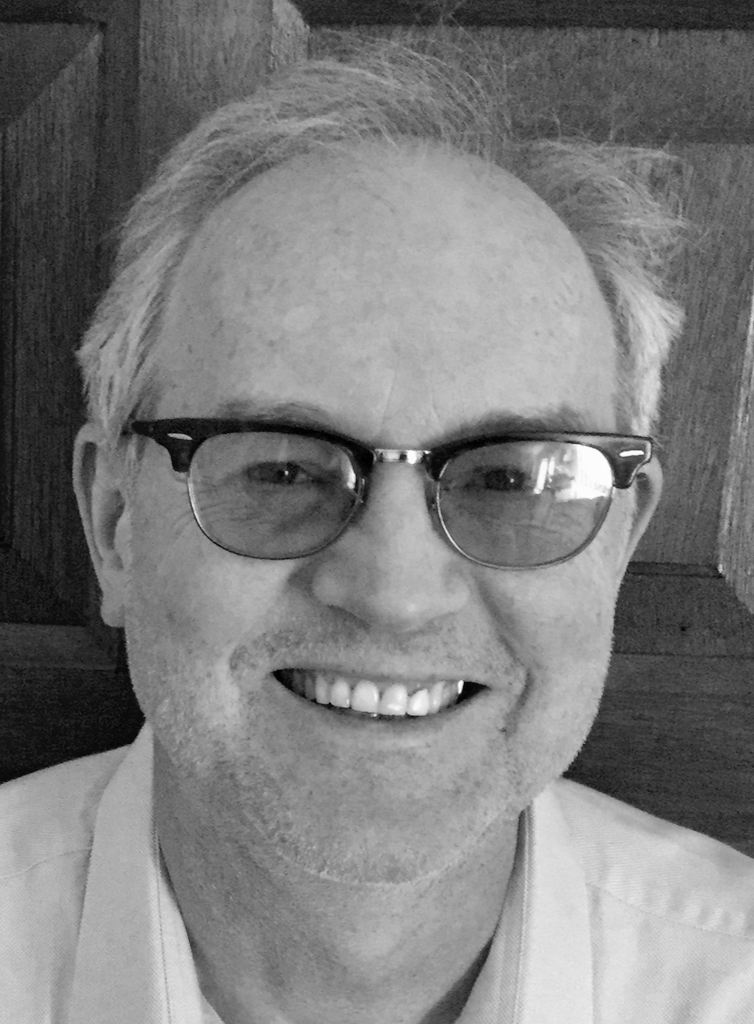
Dr. David A. Wallace, a clinical associate professor at the School of Information at the University of Michigan, Ann Arbor, will be inducted as a Fellow of the Society of American Archivists (SAA) during an awards ceremony at the Annual Meeting of SAA in Anaheim, CA. The distinction of Fellow is the highest honor bestowed on individuals by SAA and is awarded for outstanding contributions to the archives profession.
With a career spanning forty years, Wallace received his bachelor’s degree in anthropology from the State University of New York at Binghamton, graduating with honors in 1984. He received his MLS from the State University of New York at Albany before going on to earn a doctorate in library science from the University of Pittsburgh in 1997. His first professional archives position was as records / systems / database manager and series technical editor for the freedom of information advocacy NGO National Security Archive, where he edited twelve volumes of the organization’s The Making of U.S. Policy series (1988–1992). Since 1997, Wallace’s main professional positions have been in archival education. He has taught primarily at the University of Michigan School of Information (UMSI), becoming a clinical associate professor in 2013. As an archival educator, Wallace has had a profound influence on thousands of students in the information sciences, providing them with a strong foundation in archival theory, practice, and ethics. In 2015, he was awarded for excellence in instruction by UMSI. Through UMSI, from 1998 to 2007, he worked with students and local archivists at the University of Fort Hare on the university’s collections of anti-apartheid liberation movement archives. From 2015 to 2020, as part of UMSI's Global Information Engagement Program, he supervised dozens of heritage and social justice projects in South Africa.
Wallace’s work has demonstrated a commitment to both process- and institution-building and passing on knowledge to younger generations. In addition to his work through the Global Information Engagement Program, he has completed several other projects on the African continent. In Rwanda, Wallace served as the archival expert for Stories For Hope (2009–2014). This intergenerational storytelling project paired young people with trusted elders to listen to and record stories about family and culture. The project sought to democratize the creation, control, custody, and access to the resulting archives. Wallace has served on several in South Africa, including ideating and helping to implement the Freedom of Information Programme at the South African History Archive (SAHA) at the University of Witwatersrand, Johannesburg (2001–2005). Since 2018 he has worked with a colleague at the University of Cape Town to join archives with geospatial technologies to document forced removals from the apartheid era. Most recently, he has been working with the Ethiopian Archives and Library Service to develop collaborative strategies on repatriation, digitization, and archival training (2023–present).
Since 1992, he has authored over sixty publications on: Iran-Contra Affair investigations; 9-11 Commission; US war crimes in Vietnam; opioid crisis; live music archiving; recordkeeping and accountability; archiving and the shaping of the present and the past; social justice impact of archives; freedom of information; government secrecy, professional ethics, electronic records management; metadata; graduate archival education; information infrastructures; and cultural heritage on the web. He was a contributing editor to Archives & Museum Informatics (1992–1994), the predecessor to Archival Science. He received the Brit Literary Award from ARMA international in 2001, for his article on White House email lawsuits and their aftermath. His 2002 book Archives and the Public Good: Accountability and Records in Modern Society (Praeger), which he edited with Richard J. Cox, is still a foundational text that challenges the archives profession to consider and acknowledge the political and social forces that shape archives. More recently, Wallace served as editor to a special double issue of Archival Science (2011) on "Archives and the Ethics of Memory Construction” and as lead editor of Archives, Recordkeeping, and Social Justice (Routledge 2020). The essays in this latter work examine social justice around the globe and highlight recordkeeping issues therein. Wallace’s chapter in the work details interdisciplinary approaches to social justice and reiterates the imperative for archivists to see the relationship between archives and ethics.
Within SAA, Wallace has served as a member of the Program Committee; vice-chair and chair of the Archival Educators Roundtable; and chair of the Electronic Records Section. He has presented over a dozen times at the SAA Annual Meeting, published multiple articles in American Archivist, Archival Outlook, and SAA-published monographs, and served as a peer reviewer to SAA publications. He has also served as the long-time faculty advisor to the SAA student chapter at the University of Michigan School of Information.
Speaking about Wallace’s influence on their work, one supporter writes, “[Wallace] has spent nearly thirty years challenging our profession with important work and tough questions. He has the extraordinary ability to work with colleagues, students, and scholars alike—supportive, encouraging, and personable.” Another adds, “He always brings to his work a combination of impressively wide, deep, and cross- disciplinary reading; relentless research and analysis; commitment to effective communication; and determination to turn knowledge into praxis.”