2025 SAA Fellows and Award Recipients
The Society of American Archivists (SAA) honors the accomplishments and innovations of more than two dozen outstanding individuals and organizations at its hybrid conference ARCHIVES*RECORDS 2025 on August 25–27. Award categories include outstanding contributions to the archives profession, superior advocacy and public awareness initiatives, writing and publishing excellence, and scholarships and travel awards.
Congratulations to the following 2025 recipients!
Fellow: Cynthia Patterson Lewis
Cynthia Patterson Lewis, director of archives at the King Library and Archives (KLA) at The King Center, will be inducted as a Fellow of the Society of American Archivists (SAA) during an awards ceremony at the Annual Meeting of SAA in Anaheim, CA. The distinction of Fellow is the highest honor bestowed on individuals by SAA and is awarded for outstanding contributions to the archives profession.
Lewis, who began her career in 1975 as a media specialist at Arbor Hill Elementary School in Albany, NY, has dedicated over fifty years to strengthening the archives profession. She was recruited to work as an archivist at the KLA in 1980. Acknowledged for her broad and impressive knowledge of the African American experience and Dr. Martin Luther King, Jr., she was soon promoted to serve as associate director, and supported the official opening of the archives in 1981. During that period, Lewis worked closely in alliance with the Martin Luther King, Jr. National Historic Park, established by the Department of Interior to preserve the places where Dr. King was born, lived, and worshipped. In the mid-1980s, Lewis relocated to Jackson State University in Jackson, MS, where she served to promote humanities and archival programs. She served as the first archivist for the Margaret Walker National Research Center, and later as the Chief Field Archivist for the Mississippi Statewide Survey of African American Records, where she assisted in implementing the exemplary model for discovering and documenting cultural heritage resources. During the 1990s, Lewis served as a consultant for the African American Educational Archives Initiative (AAEA), which sought to locate and identify primary source materials documenting African American educational history in the United States. The AAEA survey project enlisted librarians, archivists, historians, and other scholars to access archival records at Historically Black Colleges and Universities. Since returning to The King Center in 1993, Lewis has worked for over three decades at the KLA, establishing a prototype for cultural archives and documentation strategies.
Lewis's profound impact has expanded the number of Black professionals in archives careers and solidified her legacy as a passionate, committed guardian of history. She has been instrumental in providing a range of archival services in the publication of numerous dissertations, articles, and books, as well as in the production of a myriad of documentaries and films profiling King. Lewis served as a trusted, experienced archival consultant for The King Papers Project, an endeavor envisioned by Mrs. Coretta Scott King to produce authoritative, chronologically arranged, multi-volume editions documenting Dr. King's most significant speeches, sermons, and correspondence. Alongside program development, Lewis has designed and maintained multiple impactful exhibits and displays that educate and inspire. Since the 1980s, millions of visitors to the Hartsfield-Jackson Atlanta International Airport have engaged with the permanent tribute exhibit to Martin Luther King, Jr., featuring artifacts and King family photos. Lewis has also served as a highly sought-after consultant for several acclaimed projects, including: consulting with the National Center for Civil and Human Rights to feature selections from Dr. King's manuscripts in their exhibits; participating in the inaugural project Behind the Veil: Documenting African American Life in the Jim Crow South with the Center for Documentary Studies at Duke University; and providing reference services to the Alpha Phi Alpha fraternity as they planned and built The Martin Luther King, Jr. Memorial on the National Mall in Washington, DC.
Lewis is described by her peers as an exceptional educator and mentor, passionate about advocating for the next generation of professionals, and known for providing generous and personalized support to researchers. Her presentations and educational lectures address a variety of critical areas, including documenting the Black experience, the impact of community-driven archives, and the promotion of best practices, procedures, and operational standards. In collaboration with her peers at SAA, Lewis has participated in presentations such as "African American Archives Embracing New Technologies," delivered at the SAA 1997 Annual Meeting, and "EMPOWERMENT! Documenting African Americans Since the Civil Rights Movement," presented at the SAA 2002 Annual Meeting. She launched the King Library and Archive Internship Program, which has hosted hundreds of scholars, and also worked with the American Library Association to help shape programming and deliver workshops and presentations often related to the Coretta Scott King Book Award.
Lewis actively participated in local, state, and national cultural archival organizations. As a charter participant of the Atlanta African American Advisory Group, Lewis convened with other archivists to address urgent concerns for endangered civil rights files. At SAA, Lewis served in positions such as chair of the Minority Student Award Selection Committee and the co-chair and chair of the Archives and Archivists of Color Roundtable. In service to the archives profession in the metro Atlanta area, Lewis organized a memorial for Bernice Brack, a long-term SAA staff member, to honor her life and contributions.
One of Lewis’s colleagues stated, “I watched her welcome young researchers, students, and interns into the space with the same care and enthusiasm that she displayed with me, a testament to her consistency and mission to provide access to the KLA holdings and archives profession.” Another thoughtful commenter noted, “Mrs. Lewis is beyond deserving of any recognition that honors her service in the field of archival science ... I personally like to think of her as an unsung national treasure that has stories, experiences, and perspectives worth sharing with the world.”
Fellow: David A. Wallace
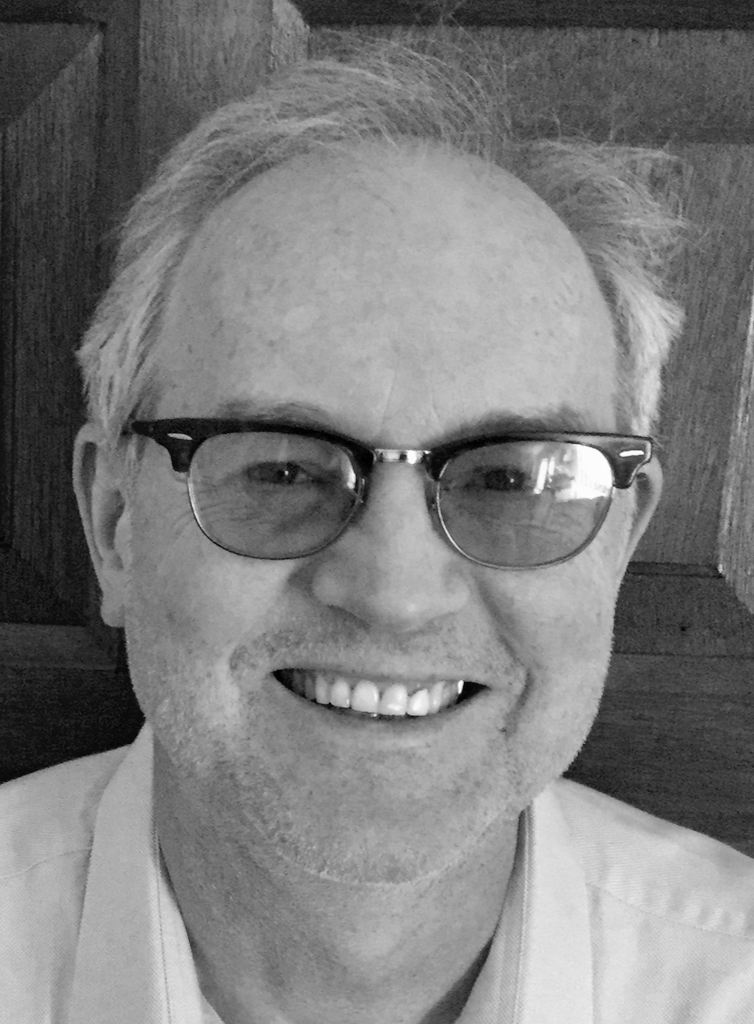
Dr. David A. Wallace, a clinical associate professor at the School of Information at the University of Michigan, Ann Arbor, will be inducted as a Fellow of the Society of American Archivists (SAA) during an awards ceremony at the Annual Meeting of SAA in Anaheim, CA. The distinction of Fellow is the highest honor bestowed on individuals by SAA and is awarded for outstanding contributions to the archives profession.
With a career spanning forty years, Wallace received his bachelor’s degree in anthropology from the State University of New York at Binghamton, graduating with honors in 1984. He received his MLS from the State University of New York at Albany before going on to earn a doctorate in library science from the University of Pittsburgh in 1997. His first professional archives position was as records / systems / database manager and series technical editor for the freedom of information advocacy NGO National Security Archive, where he edited twelve volumes of the organization’s The Making of U.S. Policy series (1988–1992). Since 1997, Wallace’s main professional positions have been in archival education. He has taught primarily at the University of Michigan School of Information (UMSI), becoming a clinical associate professor in 2013. As an archival educator, Wallace has had a profound influence on thousands of students in the information sciences, providing them with a strong foundation in archival theory, practice, and ethics. In 2015, he was awarded for excellence in instruction by UMSI. Through UMSI, from 1998 to 2007, he worked with students and local archivists at the University of Fort Hare on the university’s collections of anti-apartheid liberation movement archives. From 2015 to 2020, as part of UMSI's Global Information Engagement Program, he supervised dozens of heritage and social justice projects in South Africa.
Wallace’s work has demonstrated a commitment to both process- and institution-building and passing on knowledge to younger generations. In addition to his work through the Global Information Engagement Program, he has completed several other projects on the African continent. In Rwanda, Wallace served as the archival expert for Stories For Hope (2009–2014). This intergenerational storytelling project paired young people with trusted elders to listen to and record stories about family and culture. The project sought to democratize the creation, control, custody, and access to the resulting archives. Wallace has served on several in South Africa, including ideating and helping to implement the Freedom of Information Programme at the South African History Archive (SAHA) at the University of Witwatersrand, Johannesburg (2001–2005). Since 2018 he has worked with a colleague at the University of Cape Town to join archives with geospatial technologies to document forced removals from the apartheid era. Most recently, he has been working with the Ethiopian Archives and Library Service to develop collaborative strategies on repatriation, digitization, and archival training (2023–present).
Since 1992, he has authored over sixty publications on: Iran-Contra Affair investigations; 9-11 Commission; US war crimes in Vietnam; opioid crisis; live music archiving; recordkeeping and accountability; archiving and the shaping of the present and the past; social justice impact of archives; freedom of information; government secrecy, professional ethics, electronic records management; metadata; graduate archival education; information infrastructures; and cultural heritage on the web. He was a contributing editor to Archives & Museum Informatics (1992–1994), the predecessor to Archival Science. He received the Brit Literary Award from ARMA international in 2001, for his article on White House email lawsuits and their aftermath. His 2002 book Archives and the Public Good: Accountability and Records in Modern Society (Praeger), which he edited with Richard J. Cox, is still a foundational text that challenges the archives profession to consider and acknowledge the political and social forces that shape archives. More recently, Wallace served as editor to a special double issue of Archival Science (2011) on "Archives and the Ethics of Memory Construction” and as lead editor of Archives, Recordkeeping, and Social Justice (Routledge 2020). The essays in this latter work examine social justice around the globe and highlight recordkeeping issues therein. Wallace’s chapter in the work details interdisciplinary approaches to social justice and reiterates the imperative for archivists to see the relationship between archives and ethics.
Within SAA, Wallace has served as a member of the Program Committee; vice-chair and chair of the Archival Educators Roundtable; and chair of the Electronic Records Section. He has presented over a dozen times at the SAA Annual Meeting, published multiple articles in American Archivist, Archival Outlook, and SAA-published monographs, and served as a peer reviewer to SAA publications. He has also served as the long-time faculty advisor to the SAA student chapter at the University of Michigan School of Information.
Speaking about Wallace’s influence on their work, one supporter writes, “[Wallace] has spent nearly thirty years challenging our profession with important work and tough questions. He has the extraordinary ability to work with colleagues, students, and scholars alike—supportive, encouraging, and personable.” Another adds, “He always brings to his work a combination of impressively wide, deep, and cross- disciplinary reading; relentless research and analysis; commitment to effective communication; and determination to turn knowledge into praxis.”
Fellow: Fernanda Helen Perrone
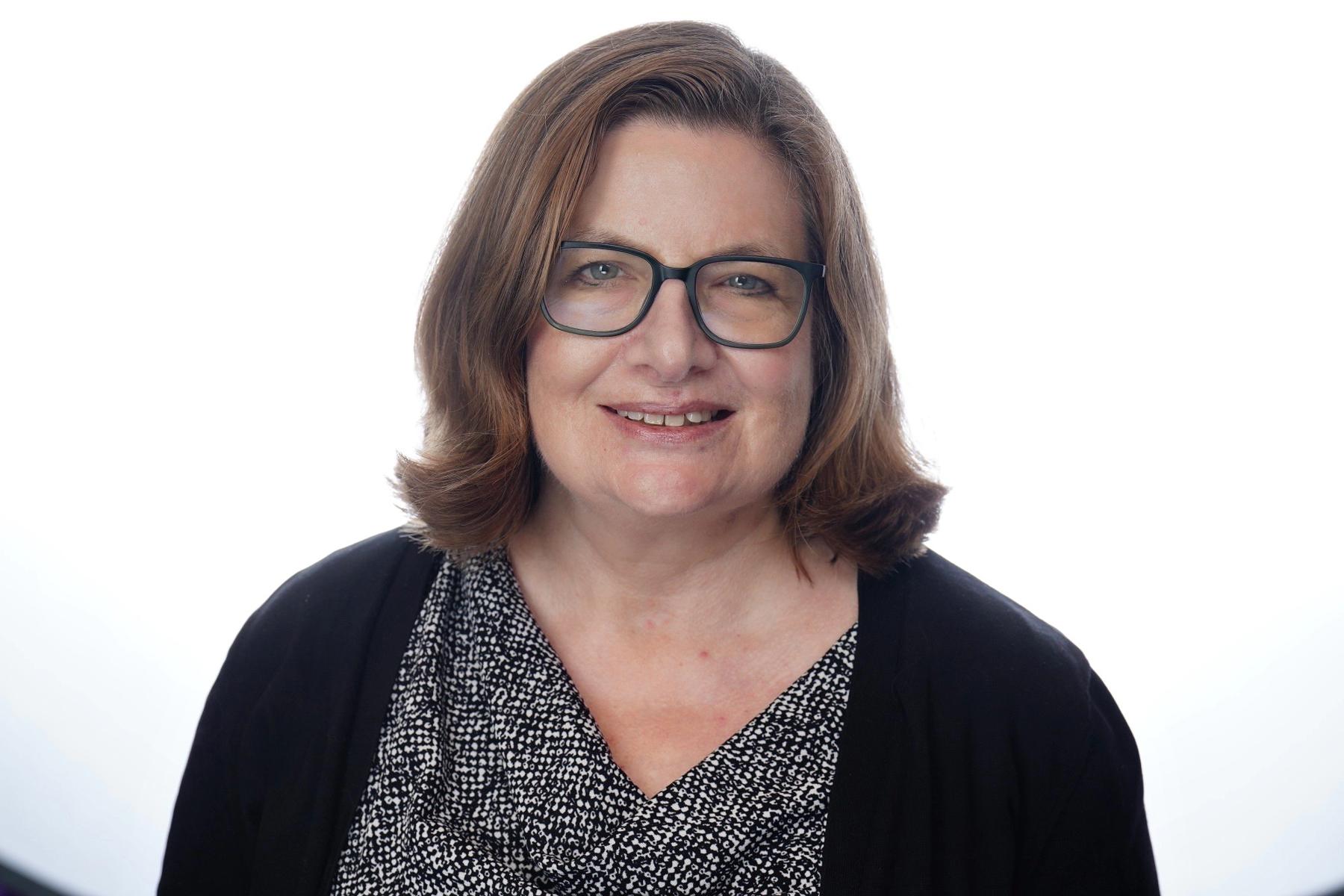
Dr. Fernanda Helen Perrone, archivist and head of the exhibitions program at Rutgers University Libraries, will be inducted as a Fellow of the Society of American Archivists (SAA) during an awards ceremony at the Annual Meeting of SAA in Anaheim, CA. The distinction of Fellow is the highest honor bestowed on individuals by SAA and is awarded for outstanding contributions to the archives profession.
A distinguished archivist with over thirty years of experience, Perrone earned a PhD from Oxford University where she focused her research on women’s education. This laid the groundwork for her professional focus on women’s history throughout her career. After receiving her doctorate, Perrone began working as an assistant in the manuscript department at the Special Collections and University Archives of Rutgers University Libraries. She has spent her decades-long career at Rutgers, eventually earning a full professorship at Rutgers University Libraries. Since 2003, she has served in her current role of archivist and head of the exhibitions program.
Perrone’s career has been marked by significant contributions to the archival profession, particularly in documenting underrepresented groups, mentoring emerging archivists, and fostering international collaborations. In her position at Rutgers, she has developed diverse subject expertise in women’s history, gender studies, the history of Rutgers, and the history of westerners in Japan during the late nineteenth and early twentieth centuries. Her work curating and promoting the William Elliot Griffis Collection, which documents the experience of Westerners in Japan during the late nineteenth and early twentieth centuries, has led to the development of international partnerships. Through her outreach, a group of scholars who studied Korean materials in the Rutgers collections discovered a set of unique photographs. Due to the destruction of many rare historical objects during the Korean War, photos like these represent an important cultural recovery. This discovery led to a collaboration with the National Archives of Korea to digitize the recovered photographs. Currently, Perrone is co-authoring an edited volume entitled Rutgers Meets Japan: A Trans-Pacific Network of the Late Nineteenth Century. For the book, coming out from Rutgers University Press this year, she invited scholars in art, history, and Asian studies to analyze the early transnational relationship between Rutgers University and Japan.
Throughout her career, Perrone has demonstrated an unwavering dedication to researching, preserving, and advocating for the archival records of women. She is particularly recognized as an expert on the archives of women’s religious communities. Her scholarly output includes numerous publications on women’s religious education, state-level voting rights history, and women artists’ archives, with notable works such as The Douglass Century: Transformation of the Women’s College at Rutgers University and On Account of Sex: Women’s Suffrage in Middlesex County, New Jersey. In 2013, she contributed a chapter to Perspectives on Women’s Archives (SAA). Her chapter, as well as the book, has spanned disciplines to reach historians, librarians, and other scholars thinking about the effect and importance of women’s archives. Her broad impact is also evident through her international and interdisciplinary speaking engagements: from New Jersey and Texas state and regional historical associations to MARAC and SAA to the Universities of Keio and Rikkyo in Tokyo, Japan.
Within SAA, Perrone has had a profound impact, particularly in mentorship. She has spent more than twenty years acting as a mentor through SAA’s Mentorship Program. She has also acted as a Navigator during SAA’s Annual Meeting since the program’s inception in 1997. In addition to her mentorship activities, Perrone has served as vice chair and chair of the Manuscript Repositories Section and has contributed to the Archivists of Religious Collections Section. She chaired the Women’s Collections Roundtable—now the Women’s Collections Section—where she revised and expanded the first directory of professionals overseeing or interested in women’s collections. This proved to be a crucial networking tool in the era before the internet was broadly accessible. In addition to her work at SAA, Perrone has worked with the American Historical Association, the Mid-Atlantic Regional Archives Conference, and Archivists of Congregations of Women Religious to advance the cause of archives.
Speaking about Perrone’s work, one supporter wrote that she has an “unwavering dedication to researching, preserving, and advocating for the archival record of women. She has remained steadfast in her commitment to ensuring that SAA recognizes and includes women’s experiences in the historical record.” Another supporter remarked, “Dr. Fernanda Perrone represents the best that the archival profession has to offer. She is a leading figure who unselfishly gives her time and energy to promote her profession.”
Fellow: Karen Trivette

Karen Trivette, PhD, recruiter of Archival Science Faculty and Students at Alma Mater Europaea University-European Center Maribor, Slovenia, will be inducted as a Fellow of the Society of American Archivists (SAA) during an awards ceremony at the Annual Meeting of SAA in Anaheim, CA. The distinction of Fellow is the highest honor bestowed on individuals by SAA and is awarded for outstanding contributions to the archives profession.
Trivette, who has been a practicing archivist for more than twenty-four years, has worked at a variety of institutions, including the State University of New York (SUNY), University at Albany, and the State Archives of New York. Trivette retired as head of special collections and college archives at the Fashion Institute of Technology-SUNY’s Gladys Marcus Library in 2024 before assisting Professor Dr. Peter Pavel Klasinc to develop the English-language Master of Science in Archival Science and Document Studies program at Alma Mater Europaea University. Working experiences with artist Jenny Holzer and art museums further diversify Trivette’s extensive career.
Trivette has played an instrumental role in mentoring hundreds of aspiring archivists, lifting her colleagues with compassion and empowering them to reach new heights. During the pandemic, she stepped up to create connections and build an inclusive community through innovative SAA College and University Archives Section "Coffee Chats" and enriching educational webinars. Her dedication to teaching is profound, leading a multitude of workshops and forging a vibrant online presence for the International Archival Affairs Section (IAAS) as senior co-chair (2024–2025). As IAAS junior co-chair (2023–2024), Trivette created Archival Vistas Briefings, a video series that discusses topics or themes of archives internationally. This year's focus is on standards, one of her areas of expertise. The Archival Landscapes seminar series began in 2020 and centers on geographies of the world and archival practice in various countries. Under Trivette's leadership, these continue to excel by offering rare, globally-focused content and by welcoming into the "SAA fold" people who are not yet members of SAA.
Additional impactful service to SAA was Trivette's four-year term on the American Archivist Editorial Board, working on critical areas such as improving operations and the board's peer review process. She also guest-edited a special section on design records for the fall/winter 2021 issue. Trivette attended and presented at SAA Annual Meetings over many years and, in 2018, chaired and moderated a conference session entitled, “Building Bridges: The Co-Education of Archivists and Architects on Major Renovation Projects.”
While serving on various leadership positions for SAA, Trivette was also president of the Archivists Round Table of Metropolitan New York, Inc.; a board member of the New York Archives Conference; and chair and board co-liaison of the AtoM (Access to Memory) 3 Roadmap Committee.
Perhaps Trivette’s most remarkable legacy lies in her groundbreaking podcast An Archivist's Tale, a powerful compilation of narratives from 120 archivists worldwide. This series, also founded and sustained by SAA Fellow, Geof Huth, represents her extraordinary ability to ignite passion and build community, standing as an indispensable oral history for our profession. The podcast documents archival progress over generations of practitioners and highlights the work being done to create a more inclusive field.
Speaking about Trivette’s approach to her work, one supporter noted that she “is not merely a practitioner; she embodies and lives out the core values of SAA, leaving an indelible mark on the profession that will resonate for generations to come.” Another supporter remarked, “Ms. Trivette shows great initiative in directing individuals to solve their research problems, utilizing and sharing her rich, diverse theoretical and practical knowledge of archival theory and practice. Her dedication to the archival profession shows through her positive influences on fellow doctoral students when she encourages them to continue pursuing their doctoral studies, especially when they have reached a ‘research crisis.’”
Fellow: Menzi Behrnd-Klodt
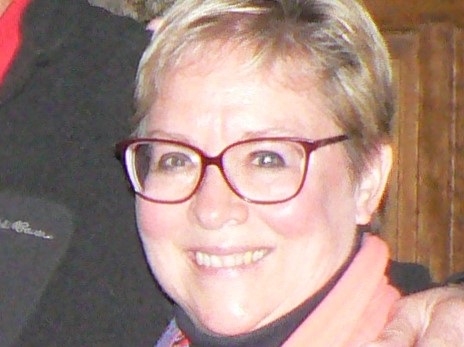
Menzi Behrnd-Klodt, consultant on legal, archival, and records management issues at Klodt and Associates, will be inducted as a Fellow of the Society of American Archivists (SAA) during an awards ceremony at the Annual Meeting of SAA in Anaheim, CA. The distinction of Fellow is the highest honor bestowed on individuals by SAA and is awarded for outstanding contributions to the archives profession.
Behrnd-Klodt’s unique level of expertise has made her an indispensable leader and educator at the intersection of legal and archival issues. Studying at the University of Wisconsin, she obtained a law degree as well as two master’s degrees in library information science and history. As an experienced attorney, archivist, and archival educator, her work spans a variety of settings, from historical societies and community archives to government records programs, universities, and corporations.
Throughout her career, Behrnd-Klodt has demonstrated a commitment to increasing archival access, a value reflected by the generations of archivists who have been empowered and enriched by her mentorship, teaching, and intellectual contributions to the field. One example among many is her work with the History and Humanities Program for the State of Hawai’i. In the mid-1980s, very few records and materials from Hawai’i's various ethnic communities, organizations, and businesses were being collected or preserved. As a consultant, Behrnd-Klodt set up a training process for staff recruits from various ethnic communities. She conducted teaching sessions, created tailor-made archival workshops, and often helped sites process their collections, working onsite alongside the staff she was training. One former colleague notes “an amazing difference pre- and post-Menzi” when describing the impact she had on archival accessibility and education in the State of Hawai’i.
Along with her consultant work, Behrnd-Klodt’s extensive portfolio of writings, dozens of papers and talks, and numerous workshops and educational services have enriched the archives profession. She has provided guidance on challenging ethical and legal issues such as confidentiality, privacy and access, donors and contracts, copyright and intellectual property, and replevin (legal action to recover property, which can include public records. Her contributions include Navigating Legal Issues in Archives (SAA, 2008) and Modules 5 and 6 of Rights in the Digital Era (SAA, 2015), two foundational books that continue to be read widely for their indispensable guidance on legal and ethical issues in archival work. She also co-edited a volume of essays with Peter Wosh entitled Privacy and Confidentiality Perspectives: Archivists and Archival Records (SAA, 2005). The essays in this book, which won the Mid-Atlantic Regional Archival Conference Custer Award for best book, cover a variety of issues and archival settings, making it the go-to source for thoughtful consideration of privacy and confidentiality in any archival organization. A long-time member of the Midwest Archives Conference (MAC), Behrnd-Klodt has spoken across the nation at numerous conferences, seminars, and workshops for SAA, MAC, and other organizations. Behrnd-Klodt also regularly teaches graduate classes at the University of Wisconsin Milwaukee and UW Madison.
An SAA member since 1989, Behrnd-Klodt was an early member of the Privacy and Confidentiality Roundtable (now the Privacy and Confidentiality Section), providing crucial guidance and going on to serve as vice chair, then chair. Currently, she serves on SAA’s Intellectual Property Working Group and the Opioid Industry Documents Archive National Advisory Committee.
One of Behrnd-Klodt’s colleagues noted that her "widespread and long-term participation in associational life reflects her generous spirit and her real commitment to educating professional peers and aspiring archivists ..." Another commenter said, “Menzi's work has not only provided structure and advice for archivists in the field, but has influenced countless students. She is one of the key names we consider when thinking about legal scholarship for the archives profession.”
Fellow: Sharmila Bhatia
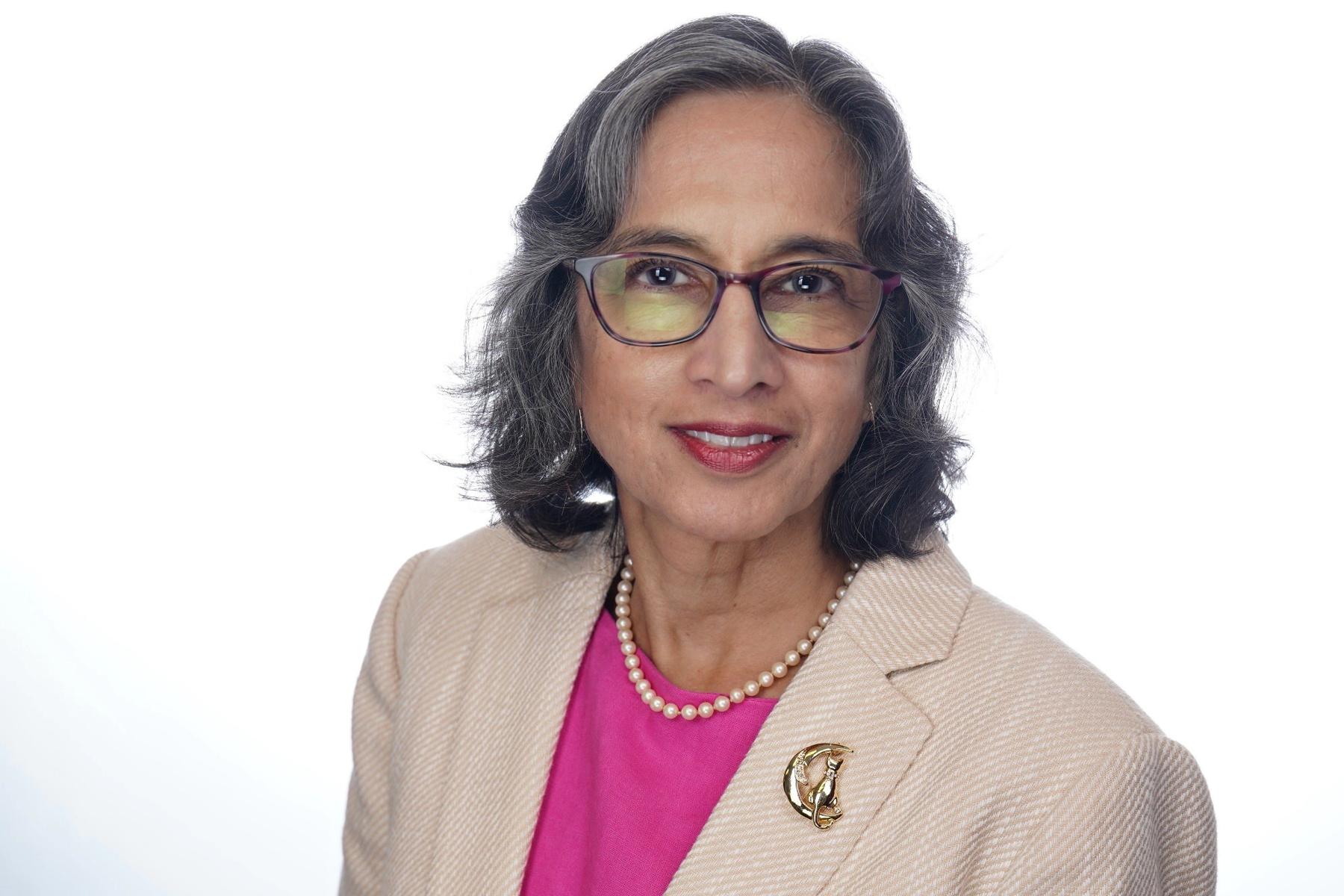
Sharmila Bhatia, senior program analyst at the National Archives and Records Administration (NARA), will be inducted as a Fellow of the Society of American Archivists (SAA) during an awards ceremony at the Annual Meeting of SAA in Anaheim, CA. The distinction of Fellow is the highest honor bestowed on individuals by SAA and is awarded for outstanding contributions to the archives profession.
Bhatia, who has spent twenty-four years at NARA, is currently with the Information Security Oversight Office and supports the Public Interest Declassification Board and the work of the Interagency Security Classification Appeals Panel. She has been responsible for developing guidance on emerging technologies and their implications for archives and records management. Her tenure at NARA reveals her progression from archives specialist to her current position as senior program analyst. During this time, Bhatia developed electronic records management guidance and collaborated with a small team to write white papers on emerging technologies, including blockchain, cognitive and artificial intelligence, and quantum information science and technology.
Prior to beginning her illustrious career at NARA, Bhatia was a reference archivist for the South Carolina Department of Archives and History for thirteen years, where she was assigned to respond to queries concerning corporate and municipal charters and statutory law. Her contributions to both the academic and practical discourse on emerging technology, electronic formats, archives, and records management have been recognized at the national, regional, and local levels. Her grasp of this “brave new world” and how it impacts the profession and its responsibilities to maintain the historical record are noteworthy, as evidenced by her work on cognitive technologies, which has been presented to the National Science Foundation, the National Association of Government Archivists and Records Administrators (NAGARA), and the Association of Records Managers and Administrators (ARMA).
Bhatia’s long list of professional service includes twenty years of leadership at SAA and the Mid-Atlantic Regional Archives Conference (MARAC). As treasurer for both SAA and the SAA Foundation from 2021–2024, she helped raise funds for the Archival Workers Emergency Fund, which granted more than $200,000. Bhatia has been extremely involved in planning SAA Annual Meetings. She was a member of the Host Committee for three years and co-chair for one and served on the Program Committee during the virtual Annual Meeting in 2021. For MARAC, Bhatia co-chaired various committees and received their Distinguished Service Award in 2024. Since 2021, she has been a member of the International Standards Organization’s Blockchain Joint Working Group.
As past chief negotiator of the American Federation of Government Employees Council 260 for the 2019 Collective Bargaining Agreement, Bhatia exemplified her willingness to face challenges many would rather leave to someone else. For the National Archives Assembly, she has served in multiple leadership roles, including president.
As one supporter wrote, “Sharmila brought temperance to what otherwise would have been heated or demoralizing exchanges. She offered strategies for budgetary and ideological reconciliation that were well considered and thoughtful. There is no greater testament to her value as a colleague and peer, but also demonstration of her proven role as a compassionate leader.” Another supporter remarked, “Sharmila has been a tireless advocate for SAA, Council, and the Foundation Board. She was a calming, thoughtful presence in meetings, matching intelligence with wit and humor. But it was her steadfast commitment to service, especially during times of change and challenge, that remains the gold standard for the rest of us.”
Archival Innovator Award: Recollection: A Civil Rights Legal Archive
The team of nine talented archivists, lawyers, librarians and support staff behind Recollection: A Civil Rights Legal Archive, is the 2025 recipient of the Archival Innovator Award given by the Society of American Archivists (SAA). The Archival Innovator Award recognizes an archivist, a group of archivists, a repository, or an organization that demonstrates the greatest overall current impact on the profession or their communities.
Recollection: A Civil Rights Legal Archive exemplifies creativity, innovation, and a forward-thinking approach to archival work that has significantly impacted both the archival field and the broader community. With a focus on public accessibility and education, the team designed an interactive platform enriched with oral histories, legal documents, press releases, and correspondence. By prioritizing oral histories and contextual narratives, the team ensures that the lived experiences of Black communities—often marginalized in traditional archives—are foregrounded and honored. Inclusion of an interactive timeline, essays, and biographies encourages deeper engagement and invites diverse audiences to explore America's civil rights legacy. Through interdisciplinary collaboration, the team brought together archivists, technologists, historians, and legal experts to create a resource that transcends traditional archival boundaries.
One innovative aspect of the Recollection project was its creation of a bespoke software solution to facilitate their archival work. By partnering with Durable Digital and leveraging the open-source Umbraco CMS, the team integrated complex archival systems, including Dynamics 365 and Preservica, to manage and preserve an expansive collection of more than 6,000 cases litigated by the Legal Defense Fund (LDF) since 1940. This sophisticated architecture streamlines workflows, reduces manual labor, and ensures long- term accessibility, while also empowering content editors to easily incorporate multimedia materials.
Additionally, the team created a robust internship program that seeks to diversify the field by creating a pathway for Black archivists and other archivists of color to gain experience in the field. Over the last two years, the team has hosted seven paid internships. The internship program allows students with interests in historic preservation, civil rights, and legal history to gain experience in the field and contribute meaningfully to LDF's archival work.
The team, which is housed in LDF's Thurgood Marshall Institute, is comprised of Donna Gloeckner, Director of Archives and Records (dgloeckner@naacpldf.org); Kayla Jenkins, Manager of Archives (Kjenkins@naacpldf.org); Ashton Wingate, Digital Manager of Archives (awingate@naacpldf.org); Ruby Mangum, Archives Assistant (rmangum@naacpldf.org); Cassandra Mensah, Archives Counsel (cmensah@naacpldf.org); Reed Jaeger, Project Manager (rjaeger@naacpldf.org); Kimberly Villafuerte Barzola, Assistant Archivist (kbarzola@naacpldf.org); Shelby Wong (she/her), Assistant Digital Archivist (swong@naacpldf.org); and Andrea Hill, Assistant Archivist and Research Librarian (ahill@naacpldf.org).
Brenda S. Banks Travel Award: Adriana Guandinango
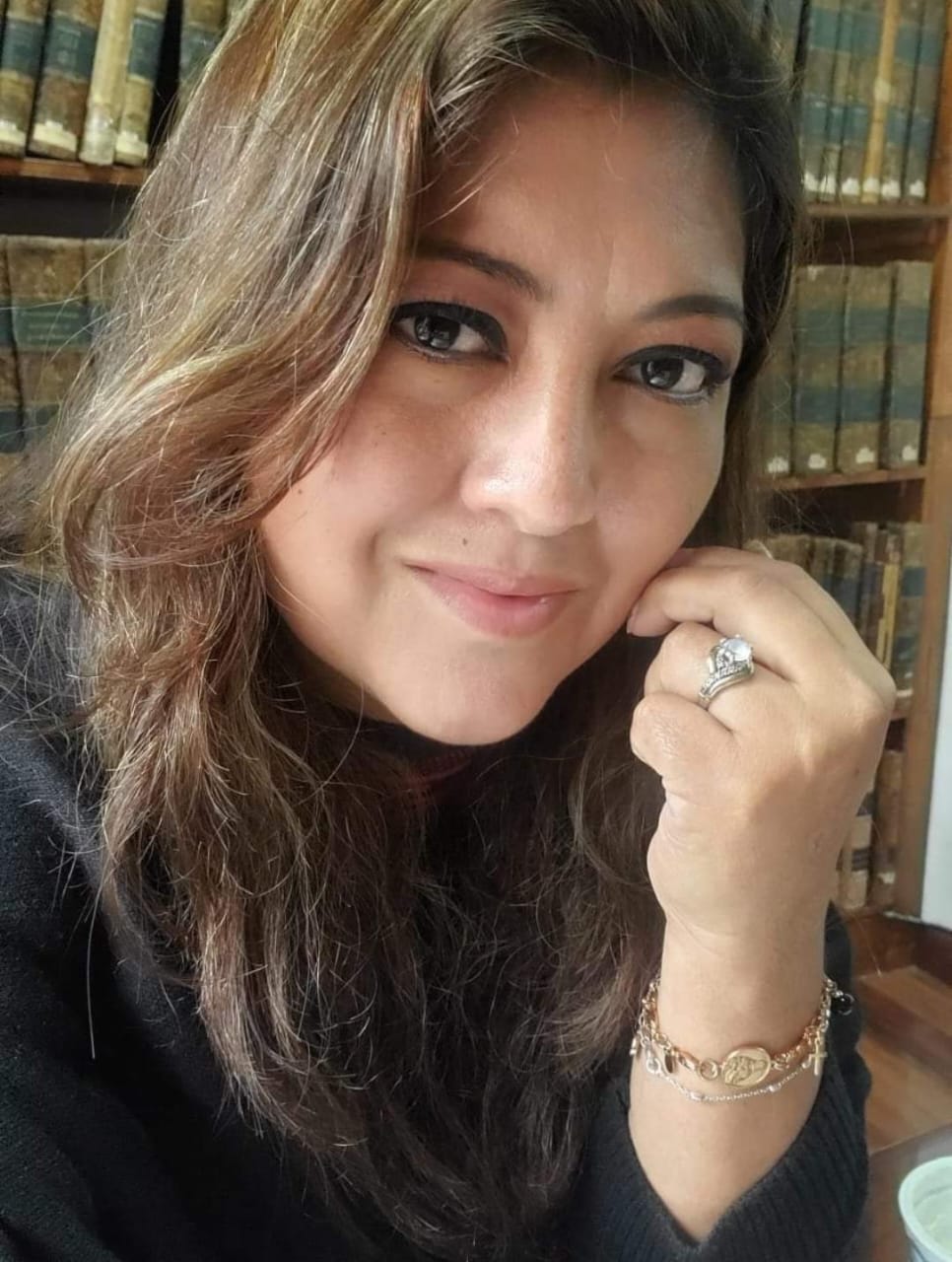
Adriana Guandinango, archivist and librarian at the Intercultural University of Indigenous Nationalities and Peoples Amawtay Wasi (UINPIAW) in Quito, Ecuador, is the 2025 recipient of the Brenda S. Banks Travel Award given by the Society of American Archivists (SAA). Created in 2017, the award honors SAA Fellow and Past President Brenda S. Banks, who co-founded the SAA Archivists and Archives of Color Section. The award, which recognizes individuals of color who are employed in archives and show interest in becoming active members of SAA, provides attendance to the SAA Annual Meeting, as well as a complimentary one-year membership in SAA.
A graduate of universities in Ecuador, Argentina, and Mexico, Guandinango holds a diploma and degree in library science and a master's degree in document management and archives. At Amawtay Wasi University, she created the library, documentation center, and archives, a unique space that preserves and integrates ancestral Indigenous knowledge in the academic and community spheres. Her duties there include acquisitions, outreach, reference, arrangement, description, and coordinating national standards initiatives. She is currently leading a project to catalog and digitize materials related to the oral history of Indigenous and Afro-descendant communities in Ecuador, ensuring that their stories are accessible and represented with dignity.
In 2024, Guandinango was selected as Ecuador's representative in the IBEREX Spain program, in recognition of her leadership in implementing international best practices. She has also represented her institution at the Centre for the Study of the Economy (CES), the Presidency of the Republic, and the International Federation of Library Associations and Institutions (IFLA) World Library and Information Congress conference in Ohio, Mexico, and Panama. She is a member of the Association of University Archives and the Association of Archives of Ecuador.
In her essay, Guandinango wrote: “As a mestiza committed to the integration of the Indigenous worldview and ancestral knowledge, I have dedicated eighteen years to archiving in Ecuador, leading innovative projects that preserve ancestral knowledge in the academic environment. The Brenda S. Banks Travel Award represents an invaluable opportunity to advance my career as an archivist committed to documenting and preserving the histories of Indigenous, Afro-descendant, Montubio, and Amazonian communities in my country, and to amplify my impact in promoting diversity, inclusion, and social justice in archives.”
C.F.W. Coker Award: JSTOR Seeklight
JSTOR Seeklight, the AI-powered collections processing technology within JSTOR Digital Stewardship Services, is the 2025 recipient of the C.F.W. Coker Award from the Society of American Archivists (SAA). The award recognizes finding aids, finding aid systems, innovative developments in archival description, or descriptive tools that enable archivists to produce more effective finding aids. To merit consideration for the award, nominees must set national standards, represent a model for archives description, or otherwise have a substantial impact on national descriptive practice.
Developed by JSTOR—part of ITHAKA, a nonprofit organization dedicated to increasing access to knowledge—in collaboration with archivists and librarians, JSTOR Seeklight addresses fundamental challenges in archival description. It integrates advanced AI models, JSTOR’s infrastructure and engineering, and archivist expertise to support a human-in-the-loop approach that keeps the generated metadata contextually grounded and ethically sound. This enables practitioners to create and refine rich metadata and collection intelligence at scale. By offering intuitive tools and workflows for reviewing, enhancing, and augmenting system-generated description, JSTOR Seeklight helps drive discoverability and illuminate connections while balancing the many roles of archivists as data stewards. As part of JSTOR Digital Stewardship Services—which also provides cloud-based digital asset management, long-term preservation via Portico, and pathways for discovery and usage—JSTOR Seeklight contributes to a holistic platform for end-to-end collection stewardship. By sustaining archivists’ central role in interpretive and decision-making processes, JSTOR Seeklight models a future for descriptive archival work that responds to contemporary challenges of scale, discoverability, and equity.
JSTOR Seeklight is a notable example of innovative and forward-thinking development within archival description. As one reviewer noted, "AI tools like named entity recognition are already prevalent in professions managing large metadata sets.... Our field must embrace all methods of archival description, and this project is a good example of innovative development in archival description." Merging archival principles, technological innovation, and a commitment to sustainable stewardship, JSTOR Seeklight exemplifies the award’s criteria.
Established in 1984, the award honors SAA Fellow C.F.W. Coker.
Council Exemplary Service Award: Archivists of Religious Collections Section Models and Resources Committee
Society of American Archivists
Council Exemplary Service Award
Honoring
ARCHIVISTS OF RELIGIOUS COLLECTIONS SECTION MODELS AND RESOURCES COMMITTEE
WHEREAS, the Models and Resources Committee has organized and delivered thirty-eight Lunch and Learn webinars, which were recorded and are available on the SAA Archivists of Religious Collections Section YouTube channel, which is linked as a channel to the SAA YouTube channel as well. Each webinar is one hour in length, and the webinars are on a wide variety of topics, covering both basic and advanced training. Approximately 100 people attend each session from across North America and even overseas.
WHEREAS, the Models and Resources Committee also organized thirteen archival chat meetings, which were not recorded. At these, a guest speaker delivers a brief presentation on a topic, and then attendees are encouraged to engage in an open discussion. Summaries of archival chat sessions are published in the Archival Spirit newsletter.
WHEREAS, the SAA Archivists of Religious Collections Section YouTube channel has 642 subscribers to the YouTube channel, with many videos receiving more than 300 views.
WHEREAS, SAA's Archivists of Religious Collections Section Models and Resources Committee has shown a commitment to continuing education opportunities for archivists across the profession.
NOW, THEREFORE, BE IT RESOLVED that SAA's Archivists of Religious Collections Section Models and Resources Committee be honored with a 2025 SAA Council Exemplary Service Award for their commitment to archival education and educational opportunities for all.
Council Exemplary Service Award: Committee on Research, Data, and Assessment (CORDA)
Society of American Archivists
Council Exemplary Service Award
Honoring
COMMITTEE ON RESEARCH, DATA, AND ASSESSMENT (CORDA)
WHEREAS, the Committee on Research, Data, and Assessment (CORDA) has established and grown multiple initiatives to coordinate and advance the research initiatives of the archival profession since 2016; and
WHEREAS, this group established the SAA Dataverse in 2021—a repository that supports the reuse of data sets for purposes of fostering research, knowledge, insights, and a deeper understanding of archival organizations, the status of archivists, and the impact of archives and archival work on broader society; and
WHEREAS, they assumed management of the annual SAA Research Forum in 2023, supporting the dissemination and discussion of research, including in-progress research; and
WHEREAS, since 2020, they have provided training on gathering, analyzing, interpreting, and using data, including subjects such as quantitative data analysis, navigating the Institutional Review Board process, and creating and conducting focus group research; and
WHEREAS, they launched a redesigned Facts and Figures microsite in 2022 to provide up-to-date and reliable basic facts and figures about archives and archivists; and
WHEREAS, starting in 2018, they extensively surveyed the landscape of research initiatives across the archives profession and built out a Research and Innovation Roadmap that was adopted by SAA Council in 2023; and
WHEREAS, in 2024, the working group (composed of Project Director Chris Marino, Jane Fiegel, Jennifer Gunter King, Emily Lapworth, Sarah Martin, and Dennis Meissner) was awarded a $150,000 IMLS grant to convene thirty-five leading subject matter experts to collectively establish a Research Agenda for the profession; and
WHEREAS, their work has been exemplary in analyzing research progress, gaps, needs for infrastructure, and collaboratively building a vision for the future innovation;
NOW, THEREFORE, BE IT RESOLVED that CORDA be honored with a 2025 SAA Council Exemplary Service Award for their persistent, creative, and collaborative efforts to advance the research initiatives of the archival profession.
Council Exemplary Service Award: Institute for Museum and Library Services, National Endowment for the Humanities, Mellon Foundation, and all other granting organizations that support the archival profession
Society of American Archivists
Council Exemplary Service Award
Honoring
INSTITUTE FOR MUSEUM AND LIBRARY SERVICES, NATIONAL ENDOWMENT FOR THE HUMANITIES, MELLON FOUNDATION, AND ALL OTHER GRANTING ORGANIZATIONS THAT SUPPORT THE ARCHIVAL PROFESSION
WHEREAS the Institute for Museum and Library Services (IMLS), National Endowment for the Humanities (NEH), Council on Library and Information Resources (CLIR), National Historic Publications and Records Commission (NHPRC), National Park Service, Mellon Foundation, and all other granting organizations that support the archival profession serve a crucial role in distributing funds that support essential services and innovative projects for archives, libraries, and museums; and
WHEREAS IMLS, NEH, NPS, NHPRC, and other federal agencies have experienced unprecedented funding cuts and staff dismissals in 2025; and
WHEREAS the Mellon Foundation and other private granting entities have stepped forward to fill urgent gaps in funding resulting from upheaval of the federal grantmaking agencies;
NOW, THEREFORE, BE IT RESOLVED that the Society of American Archivists honors IMLS, NEH, NHPRC, NPS, CLIR, Mellon Foundation, and all other granting organizations that have provided support to archives across the country with this SAA Council Exemplary Service Award. The Society expresses its sincere gratitude for the legacy of support that these entities and their dedicated staff have provided to preserve and provide access to our nation's history and collective memory. SAA stands in solidarity with the impacted federal grant agencies and is committed to sharing stories of impact and support for the crucial work that we do together.
Council Exemplary Service Award: International Archival Affairs Section (IAAS)
Society of American Archivists
Council Exemplary Service Award
Honoring
INTERNATIONAL ARCHIVAL AFFAIRS SECTION (IAAS)
WHEREAS, founded in 2013, the International Archival Affairs Section (IAAS) is a section of the Society of American Archivists dedicated to identifying and addressing issues and concerns of archives and archivists throughout the world and providing a forum for discussion, dissemination, and promotion of issues related to international archival affairs; and
WHEREAS, they have championed the virtual Archival Landscapes (2020–) and Archival Vistas Briefings (2023–) webinar series that engage international guests to exchange information about their repositories, world circumstances, and archival practices; and
WHEREAS, they are a unique and vital community of practice for archivists who seek global awareness and to direct their professional efforts internationally and, in turn, for international archivists to engage and appreciate the work of SAA;
NOW, THEREFORE, BE IT RESOLVED that the International Archival Affairs Section (IAAS) be honored with a 2025 SAA Council Exemplary Service Award for its vital outreach role in expanding the mutual awareness between SAA membership and international archives and archivists and for their innovative and dedicated programming efforts. During times of cultural and climate crisis, IAAS builds bridges between SAA and SAA membership and the broader global community of archives and archivists and this connection inspires and broadens the perspectives of all who work with them.
Council Exemplary Service Award: Karen Dawley Paul
Society of American Archivists
Council Exemplary Service Award
Honoring
KAREN DAWLEY PAUL
WHEREAS, Karen Dawley Paul retired as archivist of the United States Senate on January 31, 2025, after nearly forty-three years of dedicated service preserving the official records and personal papers of those who serve in the legislative branch of our government; and
WHEREAS, Karen Dawley Paul, for more than four decades, applied archives and records management expertise to the life cycle of senate records, advising senators, staff, and committees as creators of official records and personal papers, as well as advising archival repositories as recipients of personal papers of senators; and
WHEREAS, Karen Dawley Paul was a lead contributor, in 1983, to the Guide to Research Collections of Former United States Senators, 1789–1982, which was published as U.S. Senate Bicentennial Publication #1 to facilitate research into the rich history of the senate, and which has since merged with the online Biographical Directory of the United States Congress; and
WHEREAS, Karen Dawley Paul formalized guidelines with the Records Management Handbook for United States Senators and Their Repositories as well as the Records Management Handbook for United States Senate Committees in 1985, and has regularly updated these essential publications since that time; and
WHEREAS, Karen Dawley Paul extended her guidance to the network of archivists on the Hill, at the Center for Legislative Archives at the National Archives and Records Administration, and at repositories across the country to expand the conversation of congressional papers management; and
WHEREAS, in 1986, Karen Dawley Paul was a founding member of the Congressional Papers Roundtable (later Section) of the Society of American Archivists to serve as a professional home for archivists working with congressional archives and political papers, serving continuously as an ex officio member of its Steering Committee; and
WHEREAS, Karen Dawley Paul co-founded and shepherded the Advisory Committee on the Records of Congress since its inception in 1991, advising congressional leadership and the Archivist of the United States on the management and preservation of the records of Congress; and
WHEREAS, in 1992, Karen Dawley Paul was project director for the Congressional Papers Roundtable Task Force and led publication of The Documentation of Congress, a groundbreaking documentation strategy to collect sources and promote research in the legislative process, political activities, external relations, and administrative work of government offices; and
WHEREAS, in 2004, Karen Dawley Paul was a founding member of the Association of Centers for the Study of Congress and served continuously as an ex officio member of its executive committee, to support its mission to inform and educate students, scholars, historians, political scientists, policy-makers, and members of the general public on the history of Congress, legislative process, current issues facing Congress, and to promote the preservation of materials that document the work of Congress; and
WHEREAS, in 2009, Karen Dawley Paul was co-editor of the Waldo Gifford Leland Award-winning book An American Political Archives Reader; and
WHEREAS, Karen Dawley Paul has been a gracious, diplomatic, generous, and ever-helpful colleague to archivists in regional and national associations, serving in numerous leadership positions and collaborating on projects and publications to advance the professional work of collecting, preserving, managing, and using congressional collections; and
WHEREAS, Karen Dawley Paul has personally mentored many in the congressional papers field, encouraging and supporting emerging archival professionals;
NOW, THEREFORE, BE IT RESOLVED that Karen Dawley Paul be honored with a 2025 Council Exemplary Service Award from the Society of American Archivists for her superior and sustained record of dedication, passion, and commitment to the archival profession, promoting the value of the legislative records of Congress, and advocating for their preservation and use of these archives by researchers and the American people to better understand the development of public policy, the obligations of government, and our national history.
Council Exemplary Service Award: Ricardo L. Punzalan, Deirdre de la Cruz, and the “ReConnect/ReCollect: Reparative Connections to Philippine Collections at the University of Michigan” Project Collaborators
Society of American Archivists
Council Exemplary Service Award
Honoring
RICARDO L. PUNZALAN, DEIRDRE DE LA CRUZ, AND THE "RECONNECT/RECOLLECT: REPARATIVE CONNECTIONS TO PHILIPPINE COLLECTIONS AT THE UNIVERSITY OF MICHIGAN" PROJECT COLLABORATORS
WHEREAS, the ReConnect/ReCollect: Reparative Connections to Philippine Collections at the University of Michigan (R/R) project—co-led by Dr. Ricardo L. Punzalan and Dr. Deirdre de la Cruz—convened a diverse group of faculty, librarians, archivists, curators, collections managers, students, and members of the Filipino and Filipino American community in 2021; and
WHEREAS, the R/R project has worked in close collaborative partnership with the faculty and staff of the University of Michigan—namely, Dr. Kerstin Barndt (Department of Germanic Languages and Literatures and Museum Studies Program), Dr. Alexis Antracoli and Nancy Bartlett (Bentley Historical Library), Matha O’Hara Conway (University Library Special Collections Research Center), James Moss (UM Museum of Anthropological Archaeology)—to propose decolonial and reparative approaches to representing the University’s Philippine collections, much of which was acquired during the U.S. colonial period; and
WHEREAS, the R/R project has actively engaged and mentored graduate and undergraduate students—namely, Madeline Bacolor, Isabella Buzynski, Alyssa Caldito, Chad Kamen, Robert Diaz, Paulina Fraser, Ella Li, Emily Na, Sony Prosper, Sara Reed, Kristi Rhead, Nick Trudeau, and Sophie Wolf—in all critical aspects of decolonial and reparative work; and
WHEREAS, the R/R project has demonstrated notable commitment to developing and testing culturally-responsive and historically-minded stewardship of the Philippine collections at the University of Michigan (and beyond); and
WHEREAS, the R/R project has framed its work using reciprocal principles of reparative scholarship, reparative curation, and reparative connections to communities, for Philippine archival and museum collections that other North American institutions can emulate; and
WHEREAS, the R/R project has published an online toolkit that serves as a dynamic hub of adaptable and practical resources, including Points of Origin, a documentary film by Orlando de Guzman, that document and share the R/R process before wider audiences; and
WHEREAS, the R/R project has conducted a series of consultations with Filipin/x communities, artists, and Indigenous cultural bearers, distributed copies of archival materials to Indigenous source communities, Universities, and cultural heritage institutions in the Philippines;
NOW, THEREFORE, BE IT RESOLVED that the ReConnect/ReCollect: Reparative Connections to Philippine Collections at the University of Michigan and its collaborators be honored with a 2025 SAA Council Exemplary Service Award for their outstanding work.
Diversity Award: The Center for Radio Preservation and Archives at WYSO
 The Center for Radio Preservation and Archives at WYSO, a nonprofit community owned public radio station in Yellow Springs, Ohio, is the 2025 recipient of the Diversity Award given by the Society of American Archivists (SAA). The award recognizes outstanding contributions in advancing diversity within the archives profession, SAA, or the archival record.
WYSO and its Center for Radio Preservation and Archives has pioneered a combination of local and national archives work that advances diversity within the archives field. While there are four projects under the center’s umbrella, its most ambitious and catalyzing work to date is the HBCU Radio Preservation Project (HBCU RPP). This project is dedicated to honoring and preserving the vibrant history and cultural resource that is HBCU radio. Led by Director of the Center for Radio Preservation and Archives and HBCU RPP Director Jocelyn Robinson, the project has three elements: training and education, preservation, and public history praxis.
In partnership with the Northeast Document Conservation Center (NEDCC), the Margaret Walker Center at Jackson State University, and the American Archive of Public Broadcasting, the project has made site visits and provided field preservation services to fifteen HBCUs thus far and reformatted more than 1,000 HBCU radio audio assets. The project is also awarding capacity-building mini grants to HBCUs with radio stations to support their preservation efforts. Further, HBCU RPP is collaborating with the American Archive of Public Broadcasting—a joint project of GBH public media and the Library of Congress—to provide an option to the radio stations they work with to make digitized media accessible.
The center, as noted by one of their nominators, is creating a lasting impact on the historical record, “by prioritizing the documentation and preservation of diverse local histories, including those of communities that might otherwise be overlooked, WYSO ensures that future generations can access the full scope of the stories that have shaped the region.” Users of the collection have stated, “It not only has addressed a glaring omission in our infrastructure in our preservation of material produced by HBCU radio stations but also is modeling the single best public outreach and community building model for film and media research.”
The Diversity Award was established in 2011. Previous recipients include Christopher Haley, Julie Varee, Gregory Hinton, and SAA Fellow Rebecca Hankins.
Preservation Publication Award: Margaret Crockett and Emilie Gagnet Leumas
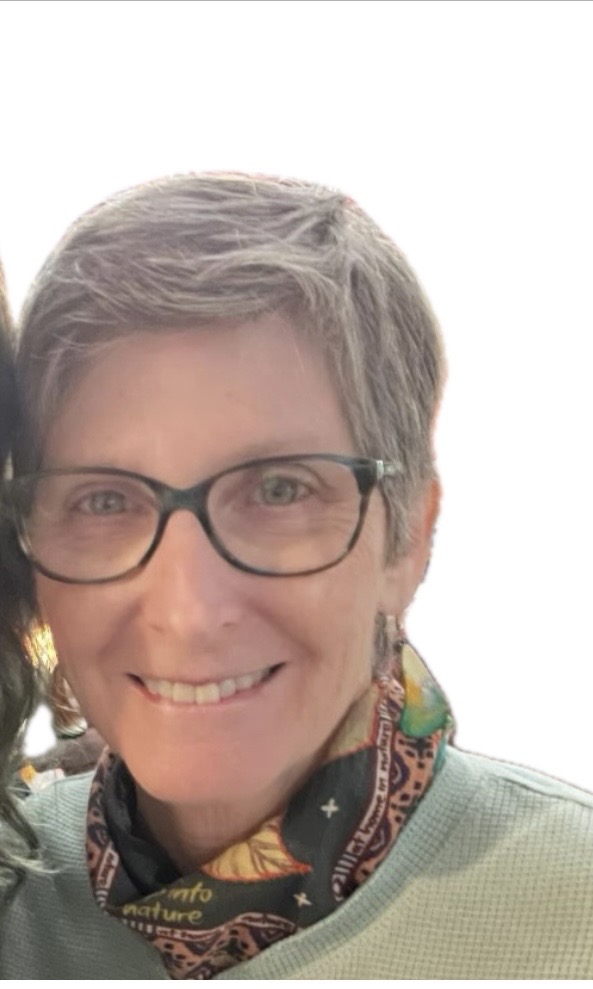
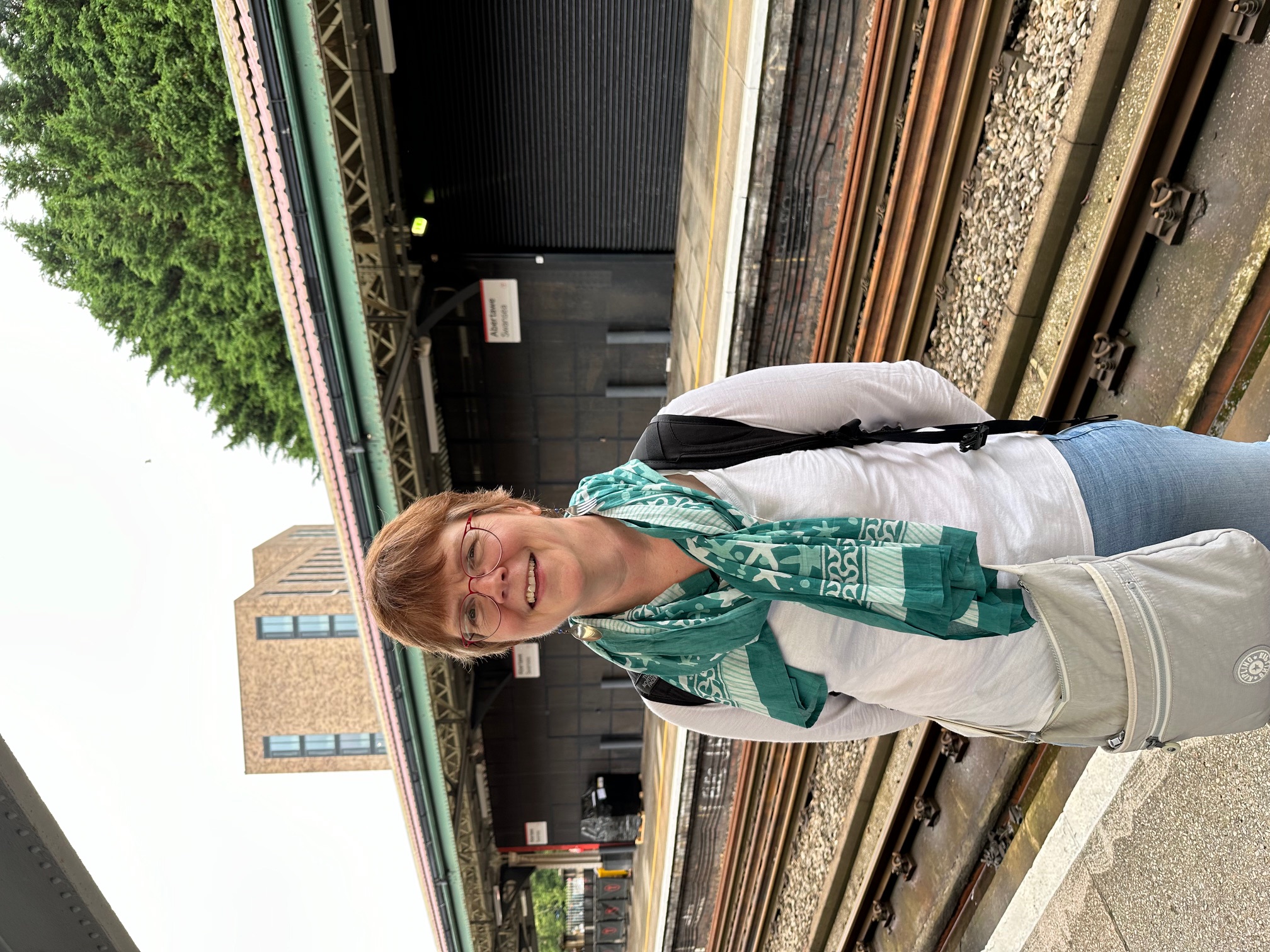
Margaret Crockett, consultant archivist and records manager and director of The Archive-Skills Consultancy, and Emilie Gagnet Leumas, archives and records management consultant with EGL Consultants, LLC, have been awarded the 2025 Preservation Publication Award from the Society of American Archivists (SAA) for their book, Emergency Management and Disaster Preparedness: A Manual for Protecting Archives (International Council on Archives, 2024). The award recognizes the author(s) or editor(s) of an outstanding published work related to archives preservation.
Emergency Management and Disaster Preparedness is a comprehensive guide to preventing, preparing for, managing, and recovering from disasters that threaten archives. As a freely available PDF with a hyper-linked table of contents and an extensive index, the manual is easy to navigate and features usable forms and checklists to support readers in creating their own disaster plans. Drawing from their professional experience of working and teaching in the field of disaster planning and protecting archives, the authors also included unique and innovative materials such as a portion of one author's disaster journal, which illustrates ways of processing trauma, and a related appendix that demonstrates how such journals can be adapted to create powerful reports on the course and results of a disaster.
The SAA Awards Committee commends the authors for their accessible and understandable work. One committee member noted, “This book is very comprehensive and practical for everyone, from small volunteer organizations to large cultural heritage institutions.” Another added, “The disaster journal excerpts in the book were very helpful to understand the response and recovery process. I hope that others will be influenced to do the same.”
This award was established by SAA in 1993. Previous recipients include Monique Lassere and Jess Whyte for their article "Balancing Care and Authenticity in Digital Collections: A Radical Empathy Approach To Working With Disk Images."
Theodore Calvin Pease Award: Merrion Dale Frederick
Merrion Dale Frederick, who is pursuing a doctorate at the University of North Texas, has been awarded the 2025 Theodore Calvin Pease Award given by the Society of American Archivists (SAA). The award recognizes superior writing achievement by a student of archival studies, and entries are judged on innovation, scholarship, pertinence, and clarity of writing.
Frederick’s paper, “A Comparative Study of Ongoing Archival Efforts for Louisiana Regional French,” takes an archival theory lens to language revitalization efforts in Louisiana and illustrates the cultural heritage and affective value potential of language archives. The paper was nominated by Dr. Ana Roeschley of the University of North Texas Department of Information Science, who noted that Frederick’s paper “combines the fields of archival studies, linguistics, and information systems to provide an in-depth analysis of archival efforts for Louisiana Regional French.” Language collection materials are often described with linguistic researchers in mind, but Frederick “illustrates the ways in which these collections could be more accessible to and better serve the minority language communities whose materials [community archives] are stewarding.”
The Awards Committee appreciated the author’s unique approach and innovative application of archival theory. The cross-disciplinary aspects of this paper, which combines linguistics, archives, and information science, present a fresh perspective on community archives and speak to the importance of the preservation of local and regional history. In addressing the intersection of collecting, preservation, and community engagement, Frederick’s work provides a model for archival engagement with marginalized communities.
Frederick’s paper will be published in American Archivist Volume 89, Number 1 (Spring/Summer 2026). Recent recipients include Sony Prosper of the University of Michigan School of Information and Ferrin Evans of the University of Toronto.
Donald Peterson Student Travel Award: Chloe Inoue
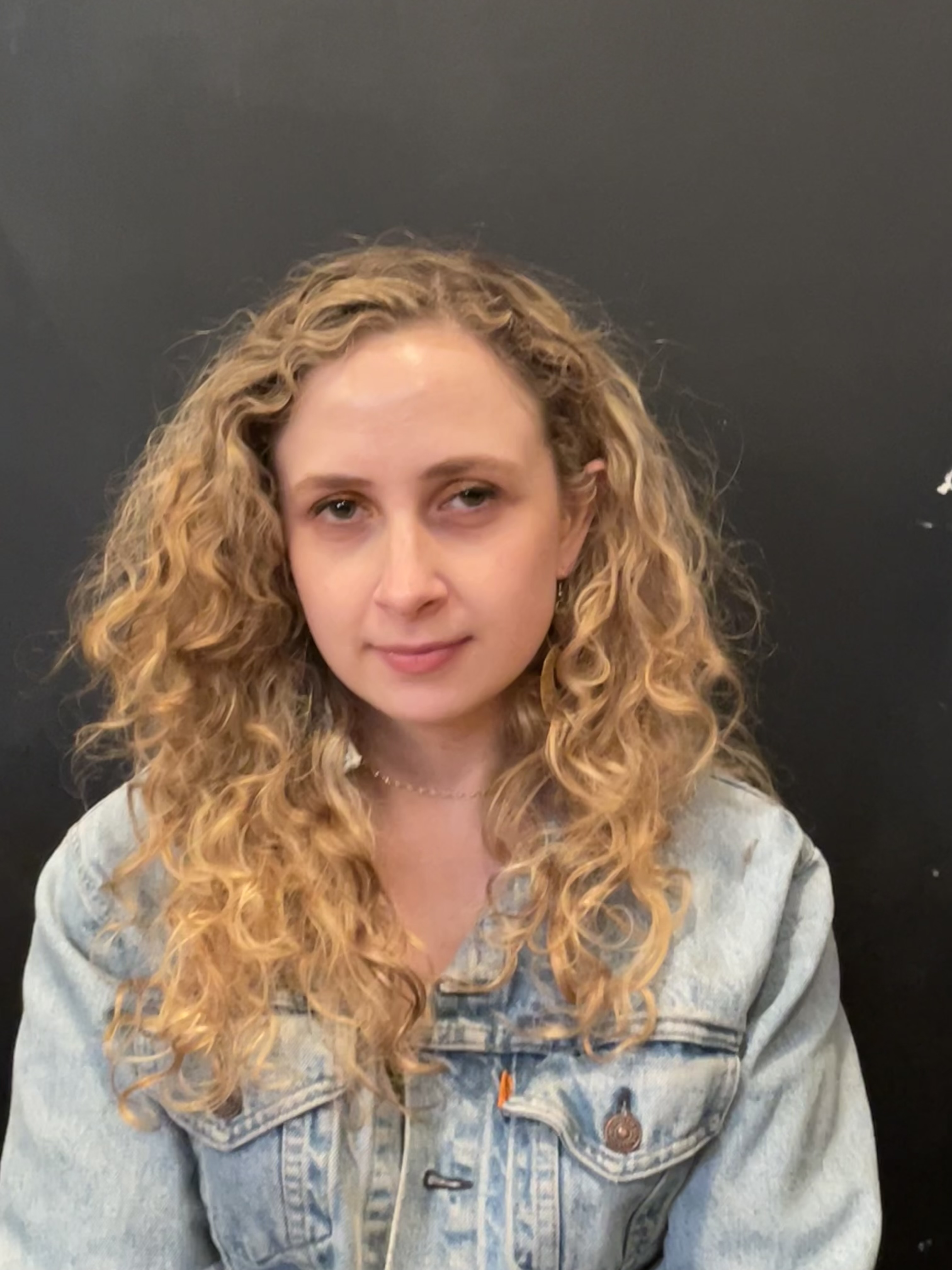
Chloe Inoue, who is pursuing an MSLIS with a certificate in advanced archives at Pratt Institute, is the 2025 recipient of the Donald Peterson Student Travel Award given by the Society of American Archivists (SAA). The award, established in 2005, supports students and recent graduates from graduate archival programs within North America to attend SAA’s Annual Meeting. The goal of the scholarship is to stimulate greater participation in SAA events, such as presenting research or joining a committee or section.
Inoue is the Pratt Archives and Digital Initiatives graduate assistant. In this role, she processes archival collections, digitizes black and white negatives from the 1950s to 1970s, and assists with accessions. While digitizing Pratt’s Static Fish collection, an anthology of comic books created by Pratt students beginning in 1985, she also curated and assembled an exhibition utilizing archival materials surrounding the New York School of Applied Design for Women. She is dedicated to making the historical record more inclusive through her research, digitization, and processing to provide a more complete view of the Pratt Institute.
In addition to her graduate assistantship, Inoue has already engaged deeply with the professional archives community through her service as an early-career member of SAA’s International Archival Affairs (IAAS) Steering Committee. Within this role, she has been assisting with updating the subtitles for the IAAS Archival Landscapes videos, making sure that the programs are more accessible for participants. Furthering her engagement in the archives field, Inoue was a mentee for the New York Association of College and Research Libraries’ 2024–2025 mentoring program, learning alongside Iris Finkel, the web and digital initiatives librarian at Hunter College Libraries.
Inoue’s research and social media content have “increased engagement with the archives in part by reflecting upon the history and contributions of community members.” Additionally, one supporter stated that Inoue “has a deep desire to learn as much as she can and her enthusiasm for the work is contagious.” Inoue has expressed that her greatest desire is to “become an archivist who listens, learns, supports, and grows.”
The Donald Peterson Student Travel Award honors the memory of New York lawyer and philatelist Donald Peterson. Recent past recipients include Sandy Yang (University of Alabama), Erika Alfieri (Florida State University), and Katherine Schlesinger (University of Arizona).
Fellows’ Ernst Posner Award: Maristella Feustle
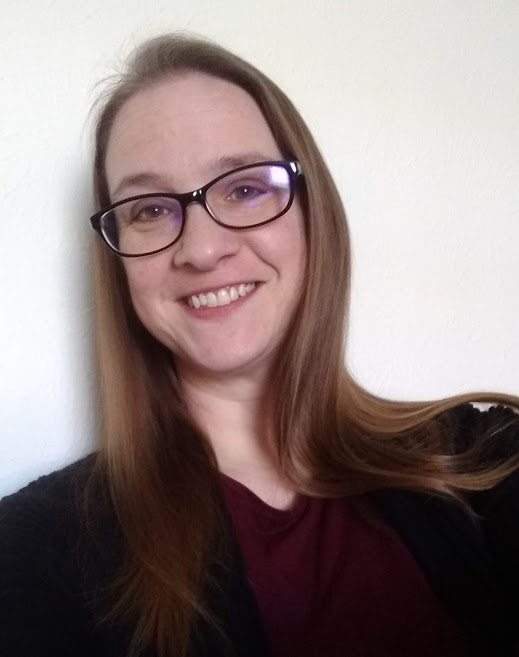
Maristella Feustle, music special collections librarian at the University of North Texas, is the 2025 recipient of the Fellows’ Ernst Posner Award given by the Society of American Archivists (SAA). The award recognizes an outstanding essay dealing with some facet of archival administration, history, theory, and/or methodology published during the preceding year in SAA’s journal, American Archivist.
Feustle’s article “Archival Authority Records and the Potential of Human-centered Archival Description,” which appeared in the Fall/Winter 2024 issue of American Archivist (vol. 87, no. 2), analyzes the research benefits of using archival authority records in the online resource Social Networks and Archival Context (SNAC). Feustle presents an innovative approach to authority records along with suggestions for how to encourage its wider use. Particularly useful was her discussion of how SNAC can help overcome the biases of a perceived canon. As a case study, she examines how the Berthe and Adolfo Odnoposoff Collection at the University of North Texas Music Library provides insights and benefits of having an intentional focus on human relationships. The study utilized the SNAC project, allowing for a thriving ecosystem of archival authority records.
The article offers a new and interesting way of expanding on a commonality in the profession that responds to current archival concerns but does so in a way that builds upon well-known processes; authority records and Describing Archives: A Content Standard (DACS) will be familiar and central to many practitioners’ daily work. This approach is helpful in redefining relationships, networks of importance, and offering a new way of seeing, similar to how Indigenous models offer perspectives that challenge some long-held standards that may be overdue for a change.
The SAA Awards Committee appreciates Feustle’s understanding of the labor involved in this approach but agrees with the author that “Resources need not be perfect before they are useful.” The committee believes this article has the potential to make a wide impact on the profession. As the author notes, “It is time for archival description to realize its fuller potential regarding the question of who is represented in our collections. This focus allows renewed consideration of how the particular interactions and relationships within a community, organization, or field of study distinguish a collection as much as the materials themselves. Even when an archival collection is ‘about’ an individual, it reflects the tangible imprint of a community, as a unique assemblage of connections between people.”
Established in 1982, the award is named for Ernst Posner, an SAA Fellow and past president as well as a distinguished author. Recent recipients include Eliot Wilczek for “Archival Engagements with Wicked Problems” and Dana Reijerkerk and Caterina M. Reed for “Archives, Decolonization, and the Politics of Tribal Sovereignty: An Examination of Accessibility Barriers to Indigenous Federal Recognition Research in the United States."
F. Gerald Ham and Elsie Ham Scholarship Award: Gabi Benedit
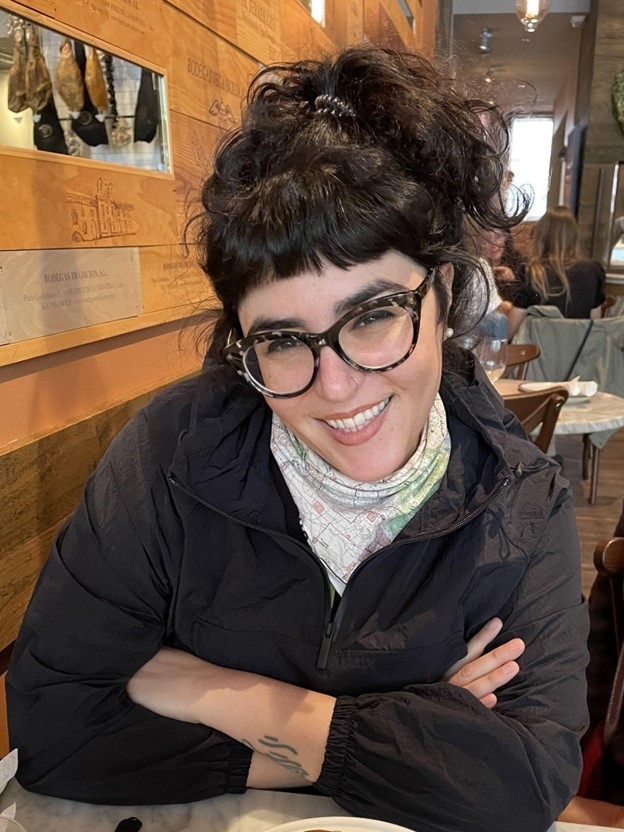
Gabi Benedit, who is enrolled in the MSLS program at the University of North Carolina (UNC) at Chapel Hill with a specialization in archival science, is the 2025 recipient of the F. Gerald Ham and Elsie Ham Scholarship given by the Society of American Archivists (SAA). The $10,000 scholarship supports the graduate archival education of a student who is studying at a United States university program. Scholarship selection criteria include the applicant’s past performance in their graduate program in archival studies as well as faculty members’ assessments of the student’s prospects for contributing to the archives profession.
Prior to her archival graduate work, Benedit earned a graduate degree in food and culture from New York University and an undergraduate degree in cinema and media studies from Wellesley College. She has coordinated several projects at el Museo de Arte de Puerto Rico, including processing the archives of Mujeres Artistas de Puerto Rico, Inc. (MAPR, Inc.), a multi-disciplinary collective of women artists active from 1983–1996. In addition, Benedit is working with Puerto Rican composer Angélica Negrón to establish her archives and assess possible repositories. At her university, Benedit served as a student assistant at the School of Library and Information Science library and worked as a graduate research assistant to Dr. Alexandra Chassanoff. In that role, she worked on the “Diving into Archives!” project which explored how to build partnerships between regional archives and K–12 educators to encourage place-based learning and historical thinking. She is currently working as the first graduate assistant in conservation and preservation at UNC libraries and is also a 2025–2026 Association of Research Libraries Kaleidoscope Scholar. She is active in her SAA Student Chapter and is serving as president for the 2025–2026 academic year.
Benedit’s focus is on creating tangible efforts to help archives reach people. She writes, “Socially engaged archival work has the power to break down barriers to entry, uplift marginalized voices, and ultimately create connections between institutions and the varied communities they serve and represent.” Her commitment and outreach has not gone unnoticed. As one supporter said, “When I think about who deserves the Ham Scholarship, I think about someone who will benefit from the support of SAA in growing their career, but also someone who can teach the field something distinctive. I feel that way about Gabi. I did not know anything about Puerto Rican cultural heritage before meeting her, but now I see why she is so motivated to make an impact on that area, as well as Latin American collections at large. She is a shining light.”
Harold T. Pinkett Student of Color Award: Katelyn Landry-Carranza
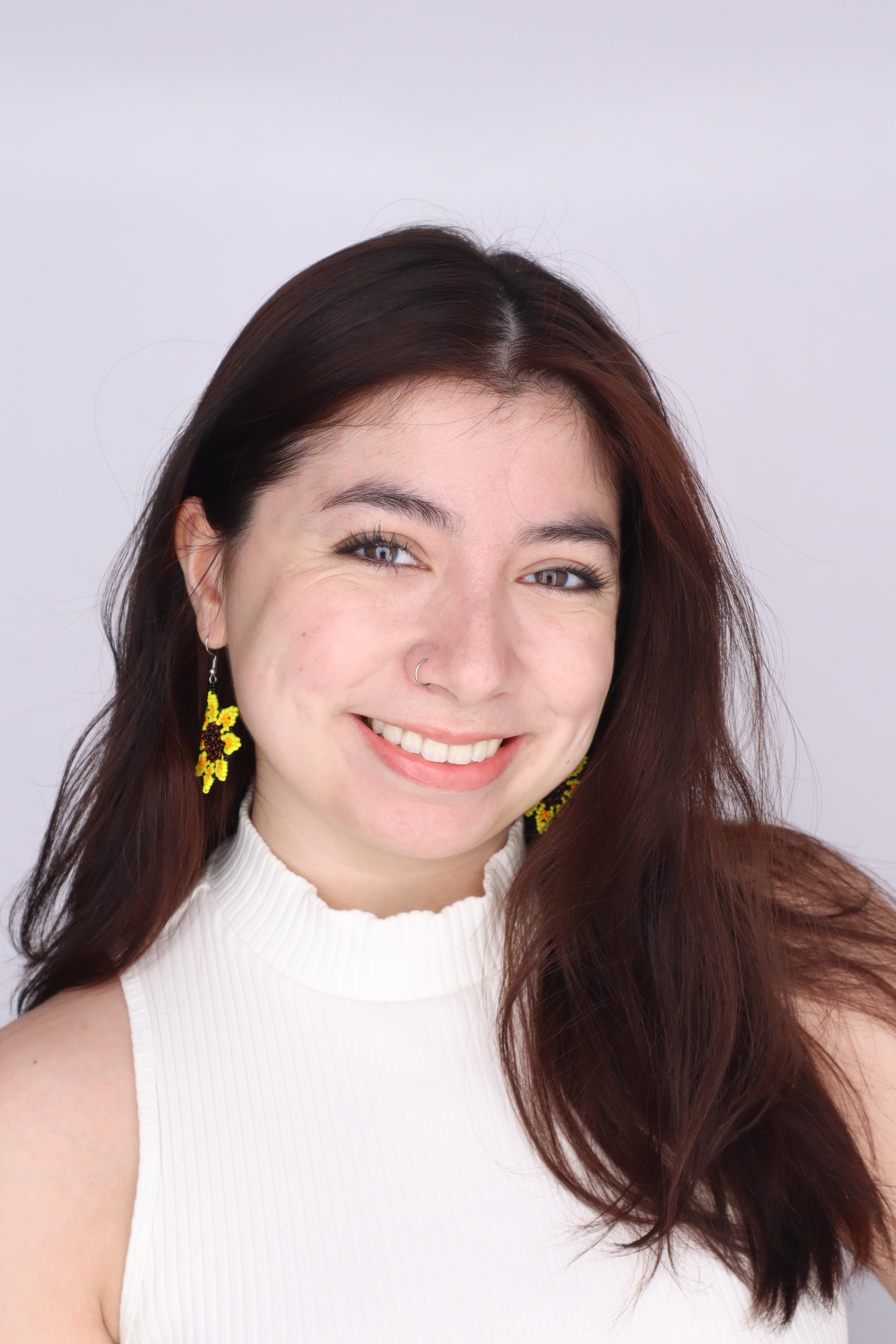
Katelyn Landry-Carranza, who recently graduated with her MA in Archives and Public History from New York University, is the 2025 recipient of the Harold T. Pinkett Student of Color Award given by the Society of American Archivists (SAA). The Pinkett Award was established in 1993 to encourage students of color to consider careers in the archival profession and to promote participation by people of color in SAA. The award honors archival pioneer Dr. Harold T. Pinkett, a dedicated SAA member who was the first African American to be appointed archivist at the National Archives, where he worked for more than thirty-five years.
Before entering her master’s program, Landry-Carranza received her BA in history from Rice University. As an undergraduate student, she worked on a team of student and faculty scholars using digitized archival materials to reconstruct the history of the nineteenth century coastwide slave trade to Texas for SlaveVoyages.org, the world’s largest online resource on forced migrations of enslaved people around the world. She also served as a preservation intern for the Galveston Historical Foundation where she created a digital exhibit in Omeka titled “Facing the Gulf: Learning Stories of Slavery in Galveston, 1816–1865.”
As a graduate student at NYU, she was a 2024–25 Archives Graduate Fellow at the Barnard College Archives and Special Collections, where she improved access to institutional records documenting student protests. She also worked as a graduate student researcher on a collaborative project between NYU and Sylvester Manor, where she helped highlight materials from the Sylvester Manor Archive that demonstrate histories of enslaved and free Black and Indigenous people, working-class Europeans, and women.
In 2024, Landry-Carranza was awarded a Digital Humanities Graduate Student Fellowship from NYU for her work on “Finding Mestizaje in Archival Metadata and Description.” This project investigated how mixed-race archival subjects are described in North American colonial collections, an under-researched topic within scholarship on reparative archival description. Thanks to the generous support of the Harold T. Pinkett Student of Color Award, she will be presenting this research at the “Emerging Voices in Archives” panel at ARCHIVES*RECORDS 2025. She is now employed as an archivist at the Galveston & Texas History Center at the Rosenberg Library in Galveston, TX. Here, she will be preserving, processing, and providing access to collections that document the story of Galveston, nationally known as the birthplace of Juneteenth and site of the Great Storm of 1900.
Landry-Carranza has an outstanding academic record and is already making contributions to the profession and her community. As she wrote in her application letter, she looks forward to the opportunity to “network with archives professionals who have conducted research and accomplished real-world projects that reflect and expand [her] professional values.”
Josephine Forman Scholarship: Rai Mckinley Terry
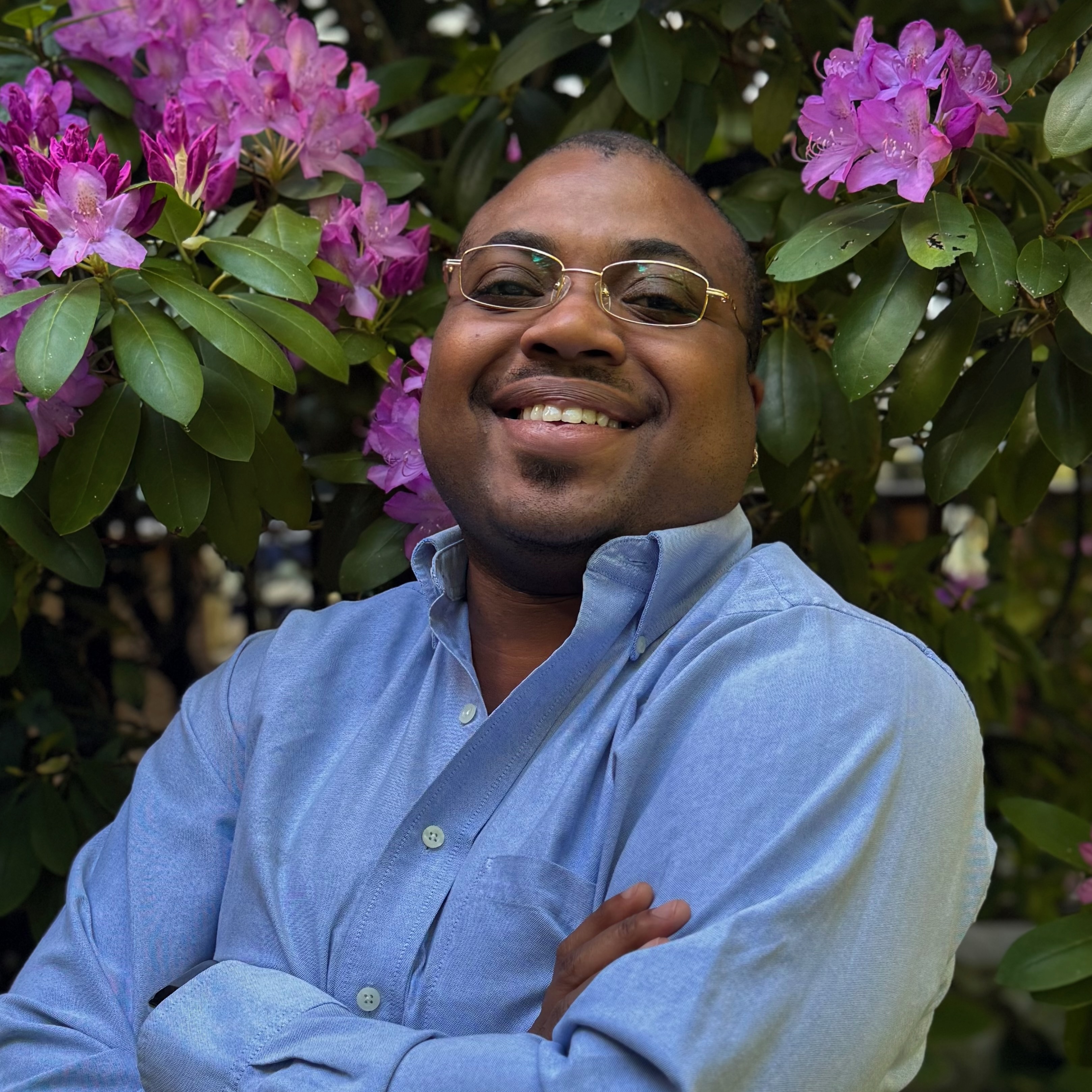
Rai Mckinley Terry, who is pursuing an MLIS degree at Simmons University with a concentration in cultural heritage and archives management, is the 2025 recipient of the Josephine Forman Scholarship, sponsored by the General Commission on Archives and History of the United Methodist Church in cooperation with the Society of American Archivists (SAA). This $10,000 scholarship provides financial support to students of color pursuing graduate education in archival science, encourages students to pursue careers as archivists, and promotes the diversification of the American archives profession.
Terry’s work in archives began as a student assistant at Brandeis University Archives, where they assisted in the course “Black Brandeis, Black History.” In that course, they witnessed firsthand the impacts of archival work as students built an interactive digital timeline documenting Black history at the university. Of that experience, they said, “It was clear to me that making archives more inclusive, accessible, and responsive was the path I wanted to pursue.” In 2022, Terry received their MA in public humanities from Brown University while also serving as an inaugural Pathways Fellow with the Association of Moving Image Archivists (AMIA). They currently work closely with the South Side Home Movie Project in Chicago, a project dedicated to collecting, preserving, digitizing, and exhibiting the many home movies created by Chicago’s South Side residents. Terry also founded Auntie Penny’s Tapes, a project named after their Aunt Penny where they digitize videotapes for individuals at no charge. Through their work, they are committed to “the preservation of magnetic media, especially for Black and queer communities for whom videotape was often the first accessible form of self-reflective media.”
Ultimately, Terry hopes to expand the archives field toward more inclusive and innovative practices “that acknowledge history as something living and evolving.” That vision has not gone unnoticed: one of Terry’s instructors described them as “one of the most insightful, visionary students who I have encountered.” Another added that Terry “elevates the level of dialogue in every space they inhabit.”
Mark A. Greene Emerging Leader Award: Brittany Newberry
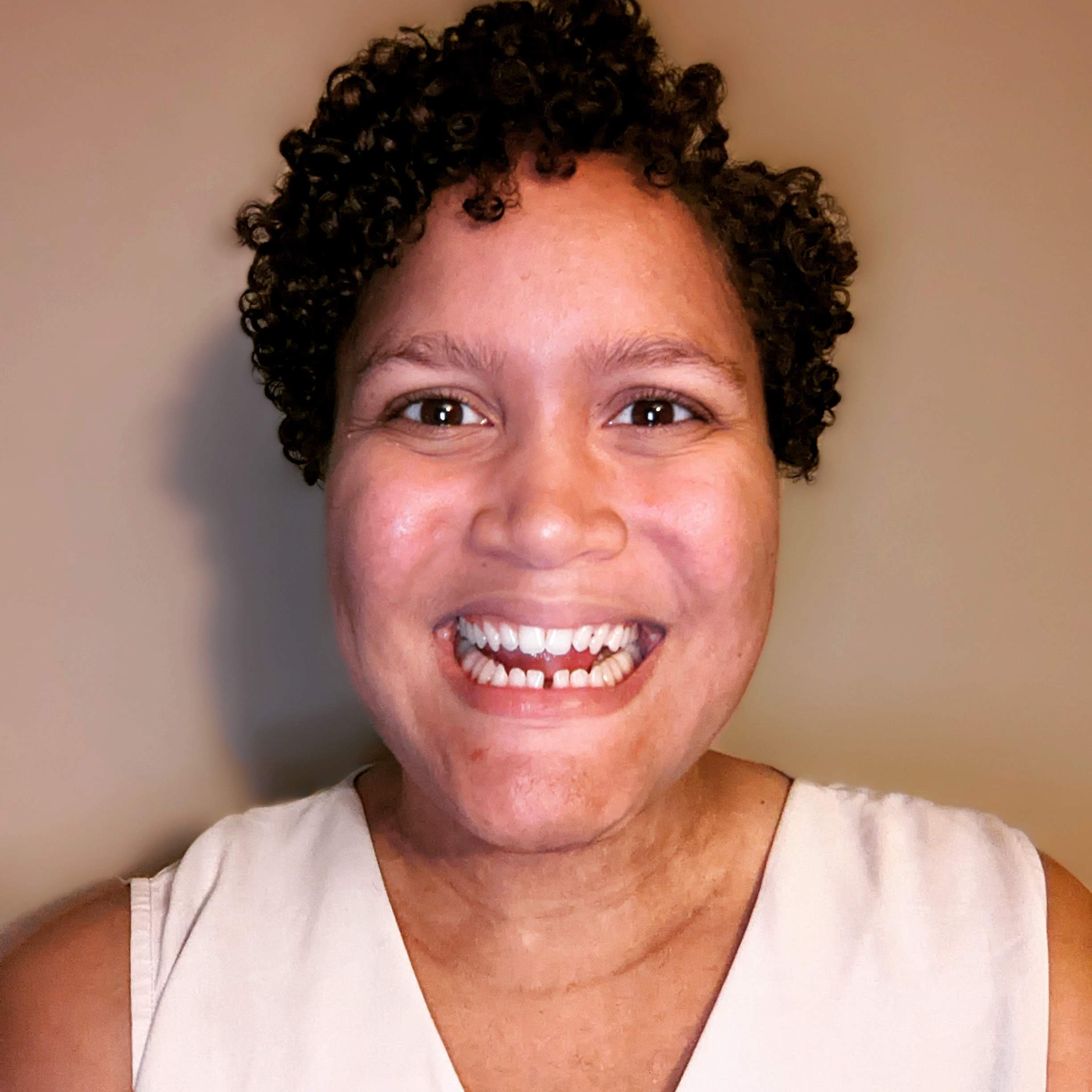
Brittany Newberry, music and popular culture archivist at Georgia State University, is the 2025 recipient of the Mark A. Greene Emerging Leader Award from the Society of American Archivists (SAA). The award celebrates and encourages early-career archivists who have completed archival work of broad merit, demonstrated significant promise of leadership, and performed commendable service to the archives profession.
In her three years of employment at Georgia State, Newberry founded and developed the Atlanta Hip Hop Archives and has served as a founding member of the Southern Hip Hop Studies Consortium. The Atlanta Hip Hop Archives is the first to document southern hip hop. Prior to her role at Georgia State, Newberry was a processing archivist at the Atlanta University Center Robert W. Woodruff Library where she processed collections related to African American history and culture. In national service, Newberry has served as a member of the ArchivesSpace Trainer Corps, while also serving on the ArchivesSpace User Advisory Council in roles as chair, member engagement team lead, and testing team lead.
In addition to her leadership at Georgia State and the ArchivesSpace Trainer Corps, Newberry is an active member of SAA, where she has served on the Archivists and Archives of Color Section Steering Committee, as chair of the Membership Committee, and as a member of the Nominating Committee. While on the Membership Committee, Newberry worked collaboratively to revise SAA's career development program, developing the Career Services Commons. She facilitated the creation of an orientation process for counselors, and she created a matching platform and communication mechanisms to enable counselors to work with services recipients. The Commons hosted 240 appointments in its first year. Newberry has also served the Society of Georgia Archivists as assistant chair, chair of the Program Committee, communications director, and outreach manager.
As one supporter writes, “Newberry has demonstrated exemplary leadership and innovation to preserve the cultural heritage of underrepresented groups through community engagement, mentorship, and advocacy." Another adds, “Her contributions reflect the spirit of Mark A. Greene’s legacy—demonstrating innovation, leadership, and a deep commitment to expanding the impact of archives on society.”
Established in 2011 and renamed in 2017, the award honors SAA Fellow and Past President Mark A. Greene.
Mosaic Scholarship: Gino Abrajano
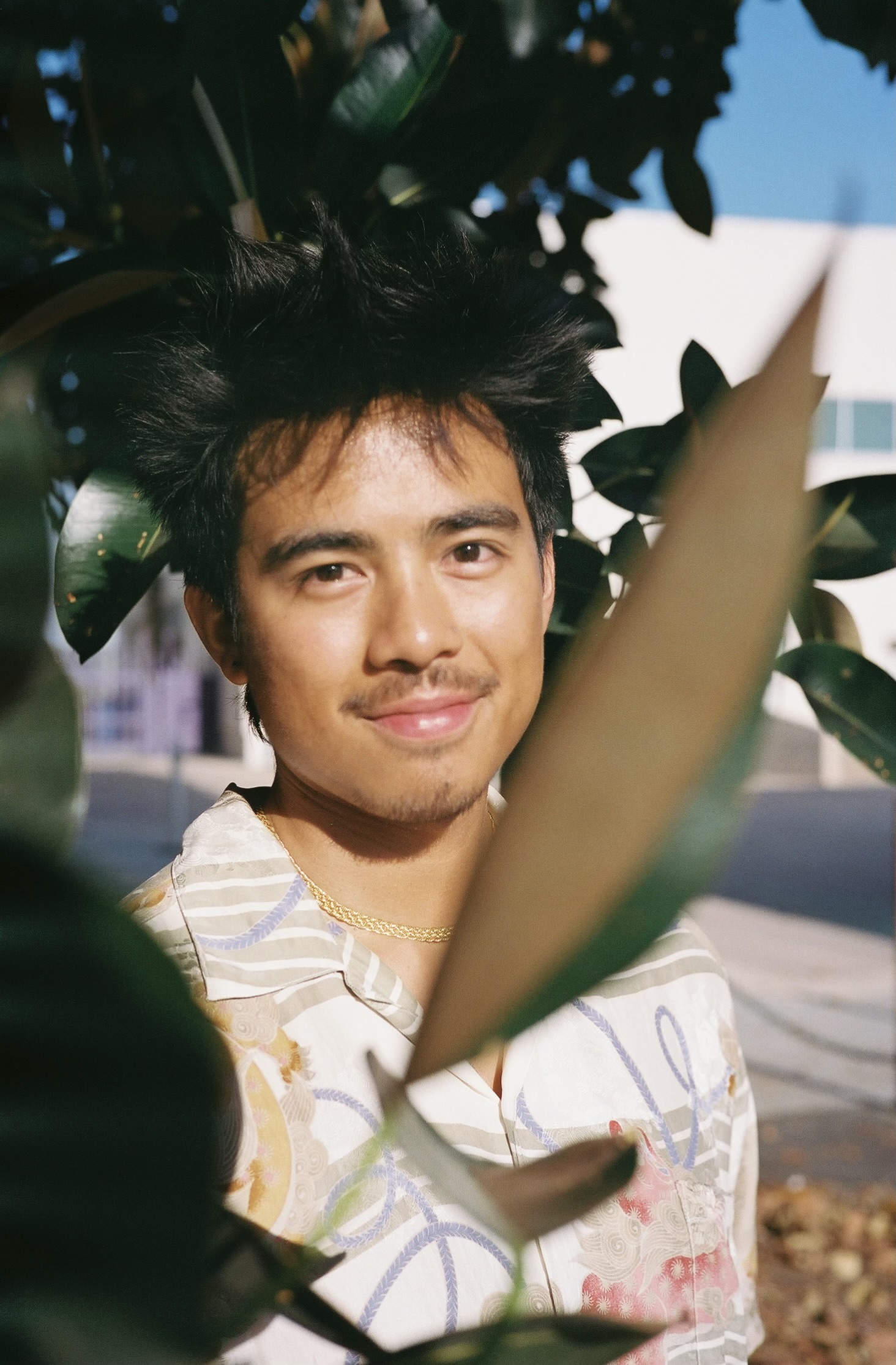
Higino “Gino” Abrajano, who is pursuing a masters degree at San Jose State University’s School of Library and Information Science, is a 2025 recipient of the Mosaic Scholarship given by the Society of American Archivists (SAA). The $5,000 scholarship is given to a student who demonstrates potential for scholastic and personal achievement and who manifests a commitment both to the archival profession and to advancing diversity concerns within it.
Abrajano graduated from San Francisco State University (SFSU) with a degree in anthropology along with minors in museum studies and journalism. While at San Francisco State University, Abrajano served as curator for the Yates Print Collection, creating monthly exhibitions for the student library. Utilizing a collection of 800 fine art prints, Abrajano focused on representing local demographics, consistently highlighting BIPOC stories and movements. Abrajano’s curated exhibitions showcased protest posters, poetry, and art books. These represented Filipinos, Asian feminists, and the Third World Liberation Front. After graduation, Abrajano worked as a collections assistant at the Japanese American National Museum, using their materials and stories to create videos that captured the Japanese American experience. Abrajano has also been working with Asian American artwork, helping to establish an archives and exhibition at the University of California, Los Angeles. He has since taken on a new position with the Marjorie Barrick Museum of Art at the University of Nevada, Las Vegas, as the collections and exhibitions manager, where he works with student volunteers to provide experience in database cataloging and art handling skills, and also on installation for Living Here, the museum's newest exhibition focusing on Asian American contemporary artists.
One supporter wrote of Abrajano, “Gino really flourished when he was researching offers of contemporary art or ephemera....His enthusiasm for these stories and willingness to be on camera really benefited the museum’s public outreach by creating short videos for social media highlighting these rarer topics.” Another stated, “Gino has already carved a clear path for his career in archives in which uplifting marginalized communities is integral....a future professional whose benefits to the archival community and others will certainly be returned exponentially.”
First awarded in 2009, the Mosaic Scholarship also provides recipients with a one-year membership in SAA and a complimentary registration to the SAA conference.
Mosaic Scholarship: Hope Houston
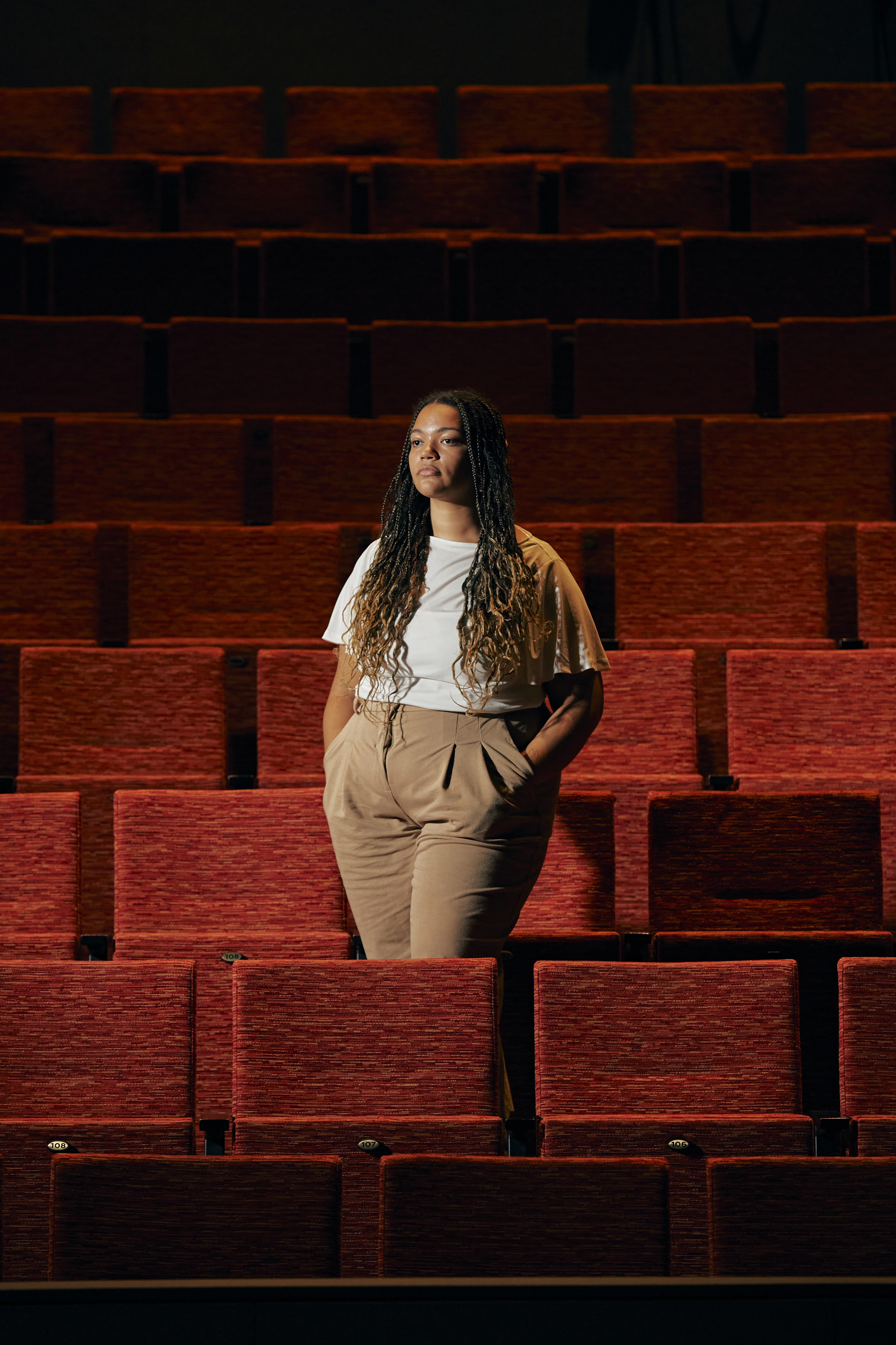
Hope Houston, who will be pursuing dual degrees, a Master of Library Information Science at Dominican University and a Master of Arts in Public History at Loyola University Chicago, is a 2025 recipient of the Mosaic Scholarship given by the Society of American Archivists (SAA). The $5,000 scholarship is given to a student who demonstrates potential for scholastic and personal achievement and who manifests a commitment both to the archival profession and to advancing diversity concerns within it.
Houston graduated from the University of Chicago with honors in both history and critical race and ethnic studies. Her research focused on 19th and 20th century African American history and analyzed public history, memory, and racial identity through the legacy of slavery in the United States. Houston explored materials related to plantations in New Orleans and at Tulane University’s Special Collections. She also gained valuable archival experience with the Chicago Black Dance Legacy Project (CBDLP), beginning in 2021 as an archival intern and later becoming program manager. One project involved developing a digital archives for Red Clay Dance Company, which included conducting oral histories, organizing concert ephemera, and preserving performance-related materials. Houston also developed a digital repository for Red Clay Dance Company. She gained valuable experience by conducting inventories, completing over twenty oral histories, and creating a plan for the organization to continue archiving future materials. Additionally, Houston established a partnership with the Newberry Library to diversify their dance collection by incorporating archival collections from five Black dance organizations.
As one supporter wrote of Hope, “I am most pleased that Hope has only continued to hone her archival skills since she has graduated. As you see, she has been working for the Chicago Black Dance Legacy Project, where she has ensured the survival of stories that would otherwise go untold.” Another stated, “Hope’s work has been absolutely excellent. I’m delighted that she is pursuing a career path that will involve archival management and library science, as I see her passion for the profession and her ability to organize and assess archival collections, as well as engage donors and the public in the importance of archives.”
First awarded in 2009, the Mosaic Scholarship also provides recipients with a one-year membership in SAA and a complimentary registration to the SAA conference.
Oliver Wendell Holmes Travel Award: Suanmuanlian Tonsing
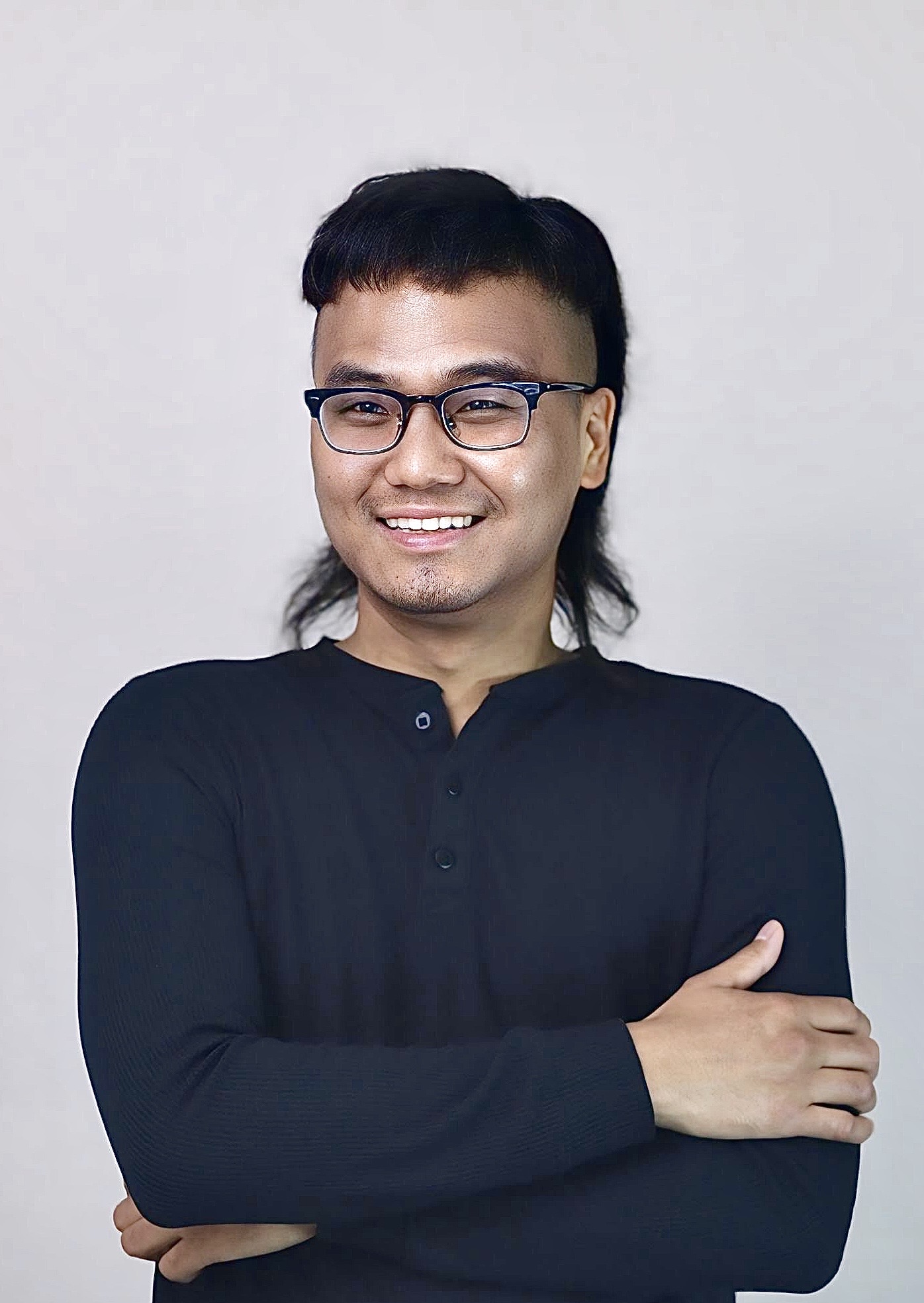
Suanmuanlian Tonsing, who is completing doctoral studies in the school of information at the University of Michigan, Ann Arbor, is the 2025 recipient of the Oliver Wendell Holmes Travel Award from the Society of American Archivists (SAA). The award enables international archivists who are training or studying in the United States or Canada to augment their experience by attending the SAA Annual Meeting.
As a member of a minority Indigenous tribe known as the Paite Zomi tribe of the Zo ancestry in the highlands of Manipur, India, Tonsing has focused his studies on how colonial archival records in social media have created harm for non-dominant Indigenous peoples. His dissertation explores how dominant Indigenous groups use archival materials in social media spaces to create and support false narratives aimed at discrediting other Indigenous groups, particularly in the context of state-sponsored ethnic violence against the Zomi and Kuki communities. As Dr. Ricky Punzalan, a member of Tonsing’s PhD committee, states, “His interest in examining the mobilization of archival records in digital spaces in the context of state-sponsored ethnic violence is an important contribution to his own Indigenous community as well as in the field of archival studies.”
Tonsing has published and presented his research extensively in India, the US, Canada, and the UK. Much of his impact is shown by his engagement with Indigenous peoples in India and Canada. Through workshops and healing circles coordinated in collaboration with Zo(mi) Academia (an organization co-founded by Tonsing and other Zomi scholars), he has helped students reconnect with their Indigenous roots and introduced Indigenous ethnographic tools to support them in documenting their experiences and observations. He has also mentored Indigenous students in Canada through the Indigenous Friends Association (IFA). Tonsing’s future goals include decolonizing archival misrepresentations of the Zomi people and advancing digital justice for Zomi communities and other socio-politically marginalized Indigenous groups. Support from the Oliver Wendell Holmes Travel Award to attend the 2025 SAA Annual Meeting will allow Tonsing to “shape the direction of my PhD dissertation…I particularly look forward to meeting the leadership and members of the Native American Archives Section and the Archival Repatriation Committee, whose work and advocacy are relevant to my research.”
Philip M. Hamer–Elizabeth Hamer Kegan Award: Andrew A. Anderson, Melissa Dinverno, and Christopher Maurer
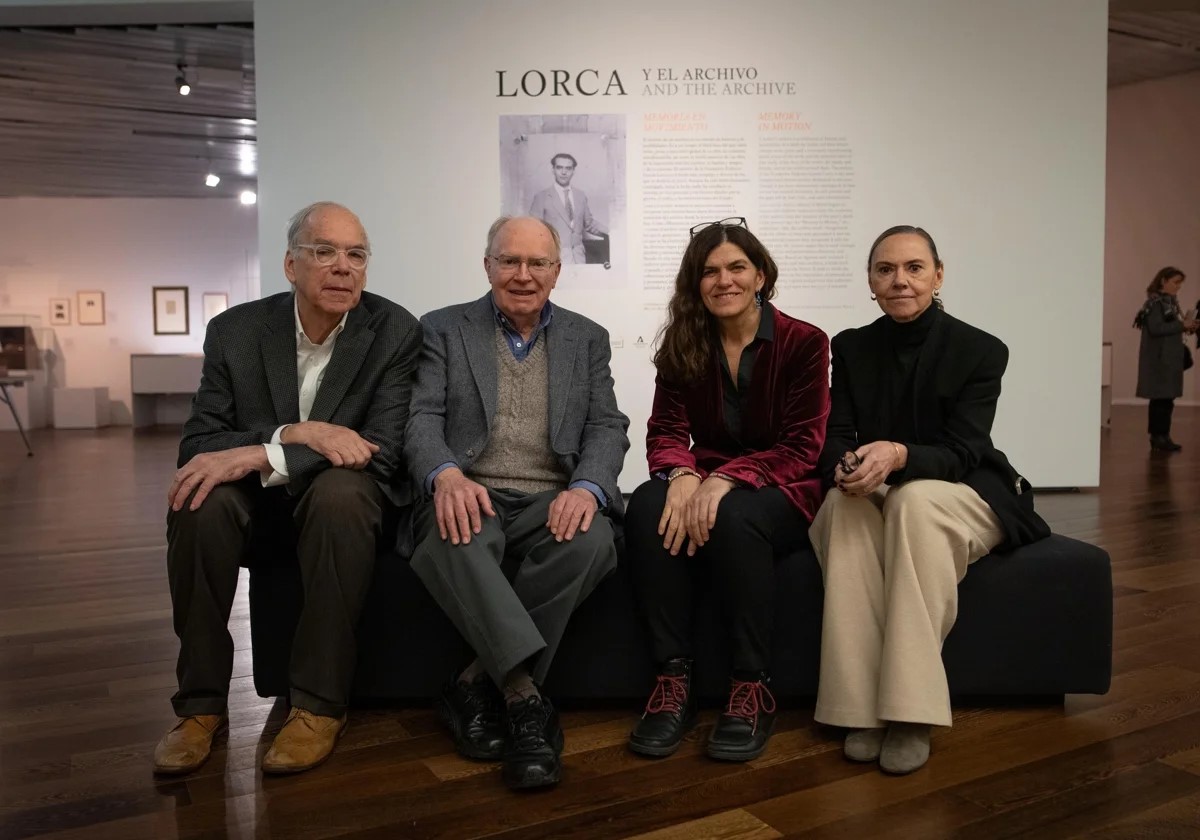
Andrew A. Anderson (University of Virginia), Melissa Dinverno (Indiana University – Bloomington), and Christopher Maurer (Boston University) are the 2025 recipients of the Philip M. Hamer and Elizabeth Hamer Kegan Award given by the Society of American Archivists (SAA) for their work on Memory in Motion: Lorca and the Archive / Memoria en movimiento: Lorca y el archivo. This award recognizes an individual, institution, or organization that has increased public awareness of a specific body of archival documents.
Memory in Motion / Memoria en movimiento is a cross-continental, cross-collection effort documenting the evolution of the archives belonging to the foundation of renowned Spanish modernist writer Federico García Lorca, tracing it across nearly a century of salvage, discovery, acquisition, loss, and perseverance. This archival research project comprises a museum exhibit and a book, both of which are bilingual English/Spanish. The exhibit, under the auspices of the Lorca Foundation and housed at the Federico García Lorca Center in Granada, Spain, featured 461 archival records, 70 percent of which had never before or rarely been seen by the public. Two grants from Indiana University are currently funding a virtual tour of the exhibit. The accompanying book features high-resolution images of 343 records accompanied by narrative text and detailed provenance information. The work also includes 30 essays by international scholars, archivists, translators, editors, journalists, and other renowned contemporary creatives.
While the exhibit was open from December 2024 to May 2025, an expansive and international media campaign brought thousands of visitors to the exhibit, including students, scholars, and government officials. A core component of this publicity was its advocacy for the care and funding of this archives, as well as governmental and public commitments to maintaining, using, and learning from the exhibit’s materials. The project incorporates materials scattered throughout collections on both sides of the Atlantic, thus demonstrating how dynamic the formation of archival collections can be, especially in troubled sociopolitical times. The bilingual presentation of both the book and the exhibit not only exemplifies the dedication that went into Memory in Motion / Memoria en movimiento, but also expands the opportunities the public has to engage with this multifaceted collection. The passion and labor that went into this campaign opened new ways of understanding Lorca’s life and the story of how his archives came to be. Anderson, Dinverno, and Maurer have gone above and beyond in conveying the intellectual merits of this archives.
This project was partially supported by Indiana University’s Presidential Arts and Humanities Program; Grant-in-Aid Program; Office of the Vice Provost for Research; Institute for European Studies, a Jean Monnet European Union Center of Excellence through the Erasmus +program of the European Union; College Arts & Humanities Institute; and the Department of Spanish and Portuguese.
Photo from left to right: Co-curators and editors Christopher Maurer, Andrew A. Anderson and Melissa Dinverno, with Lorca Foundation President Laura García-Lorca de los Ríos. Photo © ABC, Antonio L. Juárez.
Sister M. Claude Lane, O.P., Memorial Award: Eric Fair
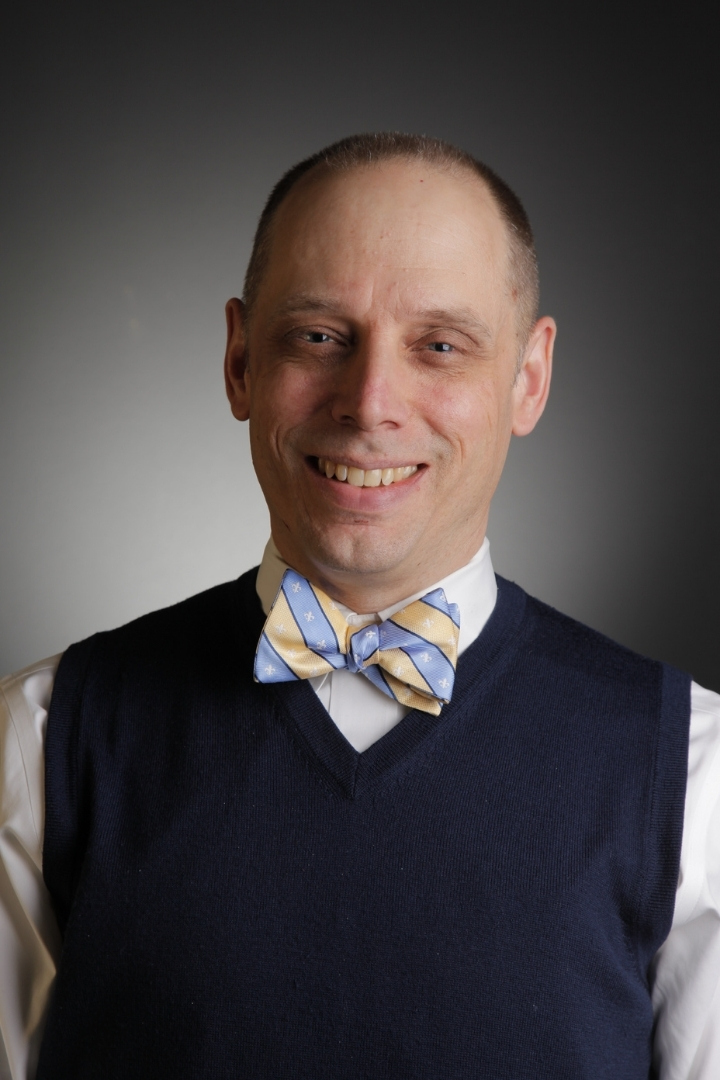
Eric Fair, director of the archives and records program for the Archdiocese of St. Louis, has been awarded the 2025 Sister M. Claude Lane, O.P., Memorial Award given by the Society of American Archivists (SAA) in conjunction with the Society of Southwest Archivists. The award honors an archivist who has made a significant contribution to the field of religious archives.
Fair has been the director of archives and records for the Archdiocese of St. Louis for over ten years. He has served as both President and Treasurer of the Association of Catholic Diocesan Archivists, and is also a long-time member of ARMA, SAA, and the SAA Archivists of Religious Collections Section (ARCS). Over the course of six years, Fair spearheaded a campaign to shed light on the history of the Archdiocese's involvement with enslavement. In 2021, Fair joined with other diocesan and religious order archivists to found CROSS (Catholic Religious Organizations Studying Slavery), an organization whose mission is to “promote open and honest access to the historical record in order to achieve a more comprehensive and truthful telling of enslavement within the Catholic Church in the United States.” His work with CROSS has included the creation of a best practices guide, organization of a CROSS conference in 2023, and numerous outreach opportunities and educational presentations. Fair also co-chairs the annual Forgive Us Our Trespasses (FUOT) Prayer Service and Maafa, a prayer service that serves as an opportunity for reflection, healing, and reconciliation within the community.
His supporter noted, “Eric’s leadership has significantly increased public awareness of St. Louis’s complex history—both its triumphs and its painful past—by creating spaces for education, remembrance, and dialogue. Through his work, he has successfully brought people together to engage in meaningful conversations about history, faith, and justice. His dedication to religious archives and his commitment to preserving and interpreting history for the benefit of the broader community make him a truly deserving candidate.”
Created in 1974, this award honors Sister M. Claude Lane, O.P., a Dominican nun who was the first professionally trained archivist at the Catholic Archives of Texas in Austin. Past recipients include Thomas J. McCullough, assistant archivist for the Moravian Archives, and Russell Gasero, retired archivist for the Reformed Church in America.
Spotlight Award: Vanessa St.Oegger-Menn
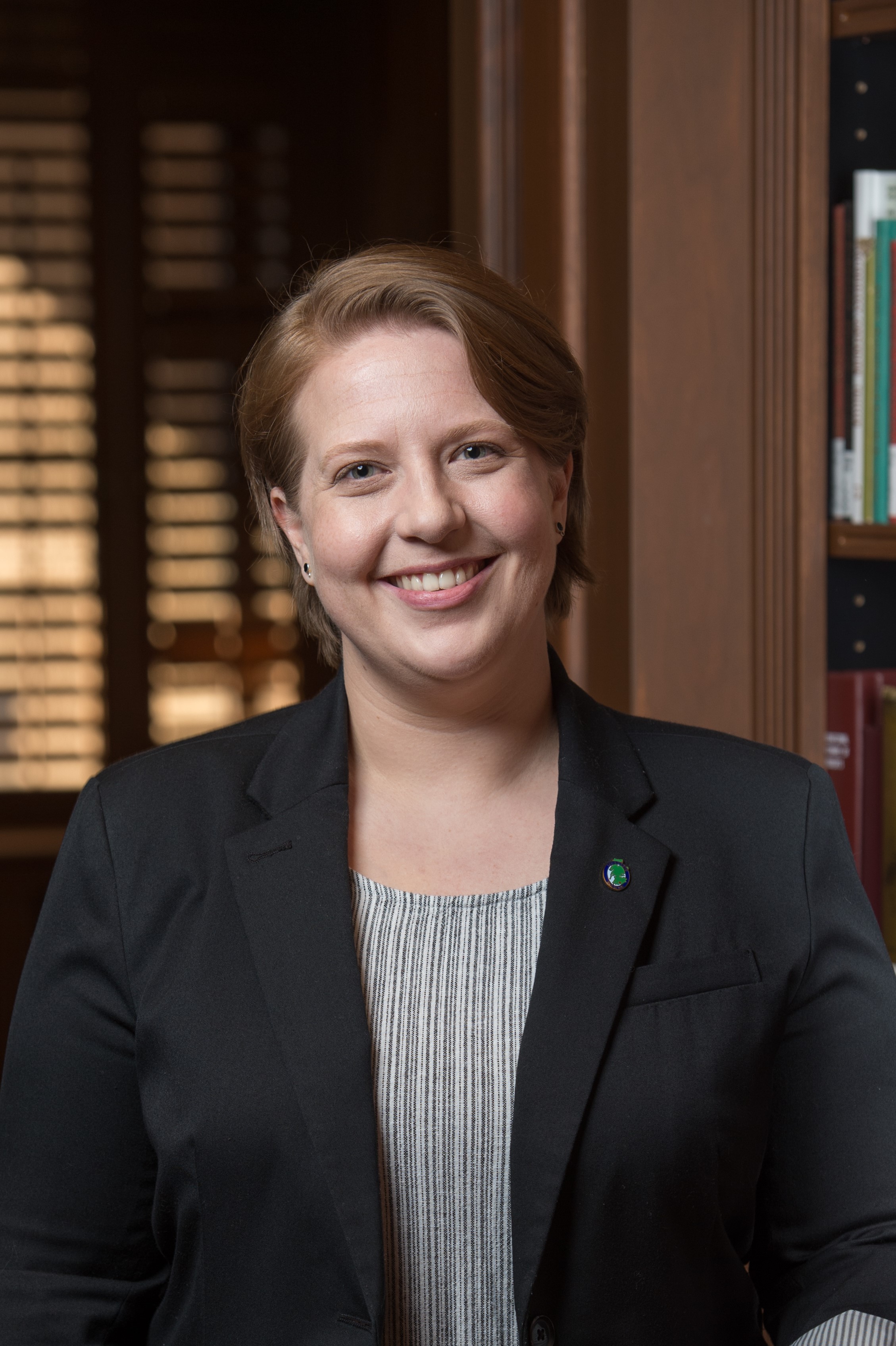
Vanessa St.Oegger-Menn, Pan Am 103 archivist and assistant university archivist at Syracuse University Libraries’ Special Collections Research Center, is the 2025 recipient of the Spotlight Award from the Society of American Archivists (SAA). Established in 2005, the award recognizes contributions from individuals who work for the good of the profession and archival collections and whose work may not typically receive public recognition.
St.Oegger-Menn holds an MA in twentieth-century British literature from California State University, Long Beach, and she earned her master of library and information science with a concentration in archives and cultural heritage preservation from Syracuse University’s iSchool.
Within SAA, St.Oegger-Menn has played a key role in SAA’s work to support archivists and communities collecting in times of crisis. In 2018, she served on the initial Tragedy Response Initiative Task Force which was assembled to create and compile resources for archivists facing sudden tragedy. The Task Force then evolved into the Crisis, Disaster, and Tragedy Response Working Group (CDTRWG) with the charge of maintaining and updating SAA’s “Documenting in Times of Crisis: A Resource Kit,” developing immediate and ongoing resources for archivists dealing with crises, and building partnerships with organizations focused on relief efforts for cultural organizations. St.Oegger-Menn was asked to serve as one of the co-chairs of the inaugural working group.
In this role, she had an incredible impact on the work of this group. She led crucial efforts to create organizational infrastructure and identify workflows to keep projects on track, as well as worked with committee members and council liaisons to overcome roadblocks. St.Oegger-Menn has also served as one of the group’s mightiest advocates, representing CDTRWG through speaking engagements and at regional, national, and international conferences. She has co-presented on the working group to a number of internal and external organizations, including the Art Libraries Society of North America and the Australian Society of Archivists. She co-wrote an article in 2023 for SAA’s magazine, Archival Outlook, that outlined the efforts of the Working Group, and she has served as the facilitator for the working group’s ongoing speaker series. When it was time for her to roll off as co-chair, St.Oegger- Menn devised a strategy for a post-chair transition to offer support to incoming co-chairs and also agreed to stay on the working group, even co-leading the Collaboration and Outreach subcommittee.
St.Oegger-Menn’s hard work and empathy has not gone unnoticed by her colleagues. Through her work with trauma-informed archives, she has tirelessly supported archivists in times of crisis. As her nominator, Kara McClurken, noted, “Her passion, her empathy, and her experiences through the working group and through her position as the Pan Am 103 archivist at Syracuse University have been essential to the creation of a supportive and sustainable low-cost support network to archivists and communities experiencing trauma…. Long after her time on the working group is over, the infrastructure, the tools, and the community she has fostered will serve as a legacy to her dedication to the cause.”
Established in 2015, past recipients of the Spotlight Award include Heidi Steed (State of Utah Division of Archives and Records Service), Georgina Tom (‘Iolani School), and Lee Price (fundraising professional for cultural institutions).
Waldo Gifford Leland Award: Ilaria Scaglia and Valeria Vanesio
Ilaria Scaglia, senior lecturer in modern history at Aston University, UK, and Valeria Vanesio, lecturer in the Department of Library Information and Archive Sciences at the University of Malta, are the 2025 recipients of the Waldo Gifford Leland Award given by the Society of American Archivists (SAA) for their work as editors of the collection Archives and Emotions: International Dialogues Across Past, Present, and Future, published by Bloomsbury in 2025. The award is given for writing of superior excellence and usefulness in the fields of archival history, theory, and practice.
Archives and Emotions is a landmark piece written together by archivists and historians to investigate the many ways in which emotions have and continue to influence archival history and practice. Building on the “emotional turn” in the study of history and the humanities, this impressively edited volume brings together a wide range of contributors from numerous countries, traditions, and types of archives to explore how emotions and affect shape the construction and management of archives, as well as the individuals and communities that engage with them. The cover is meant to reflect this: it is an original work of art made specifically for the book by Nunzia Spadolino, who dubbed the piece “Pagine di Emozioni.”
With excellent, accessible writing, this volume is a welcome addition to the literature on archives in the humanities, bringing archival practitioners and theorists to the conversation. The book’s willingness to engage with contemporary currents of historical and archival thought, including critical archival studies and notions of radical empathy, trauma-informed practice, and ethics of care in archives, demonstrates an admirable level of diligence and attention. One reviewer celebrated the authors and editors for “bringing new dimension and understanding to important conversations happening in the field” in a way that makes archivists feel “truly seen.”
Established in 1959, the Waldo Gifford Leland Award is named for one of North America’s archival pioneers and SAA’s second president. Past recipients include Eira Tansey for A Green New Deal for Archives (CLIR, 2023), James Lowry for Disputed Archival Heritage (Routledge, 2022); and Jason Lustig for A Time to Gather: Archives and the Control of Jewish Culture (Oxford University Press, 2021).